Physical Address
304 North Cardinal St.
Dorchester Center, MA 02124
Physical Address
304 North Cardinal St.
Dorchester Center, MA 02124

You’re petting your dog like any normal day — and suddenly you notice it. A patch of fur that wasn’t there before. Or maybe you’ve been watching it slowly get worse for weeks, hoping it would just go away on its own.
Your dog is going bald.
And it’s scary. Because your dog’s coat is supposed to be thick, shiny, and full — not thinning out in patches or falling off in clumps.
Here’s the thing — hair loss in dogs is extremely common. But “common” doesn’t mean you should ignore it. Because behind that bald patch could be anything from a simple nutritional fix to a serious hormonal condition that needs medical attention.
In this complete guide, you’ll learn:
Your dog deserves a full, healthy coat. Let’s figure out how to get it back. 🐾

Rocky was a 5-year-old Beagle who had always had a beautiful, glossy coat. Then one morning, his owner Maria noticed something alarming — a perfectly round bald patch, about the size of a coin, just above Rocky’s tail.
She waited a week. It got bigger.
She tried a new shampoo. No change.
By week three, there were three separate bald patches — and the skin underneath looked red and slightly scaly.
At the vet, the diagnosis came quickly: ringworm — a fungal infection that causes circular hair loss. Completely treatable, but only with the right antifungal medication.
Within six weeks of treatment, Rocky’s fur had grown back completely.
Rocky’s story has a happy ending. But it started with one ignored bald patch. The sooner you understand what’s happening, the faster you can fix it.

The medical term for hair loss in dogs is alopecia. It simply means abnormal loss of fur — either in patches, all over the body, or in specific symmetrical areas.
Normal shedding is completely different. All dogs shed to some degree — it’s healthy and natural. Alopecia is when hair falls out and doesn’t grow back, or falls out in unusual patterns.
The location, pattern, and appearance of the bald area gives enormous clues about the cause:

Allergies are the most common underlying cause of hair loss in dogs. When a dog’s body constantly reacts to something — whether food or environment — the chronic inflammation eventually damages hair follicles and leads to thinning and bald patches.
Three types of allergies that cause hair loss:
A dog can become allergic to a food they’ve eaten for years. The most common culprits are chicken, beef, dairy, wheat, and soy.
Where does hair loss appear? Typically around the face, ears, paws, belly, and base of the tail.
Other signs:
What to do: Run a strict elimination diet for 8 to 12 weeks using a novel protein your dog has never eaten — duck, venison, rabbit, or salmon. No other food, treats, or flavored medications during this period.

Pollen, dust mites, mold spores, and household chemicals can all trigger chronic skin inflammation in allergic dogs. Over time, constant scratching and skin damage leads to hair thinning and loss.
Key pattern: Hair loss from environmental allergy tends to appear in areas the dog scratches most — paws, face, belly, armpits, and groin.
What to do:
Direct contact with synthetic carpet, plastic bowls, or chemical-treated grass can cause localized hair loss exactly where the irritant touches the skin.
What to do: Switch to stainless steel bowls, use fragrance-free detergent on bedding, and rinse paws after outdoor walks.

Several parasites directly damage hair follicles or cause such intense scratching that the dog literally scratches their own fur away.
Even a single flea bite can trigger a massive allergic response in sensitive dogs. The resulting scratching, biting, and rubbing causes significant hair loss — particularly at the base of the tail, inner thighs, and lower back.
Look for tiny black specks in the fur — flea dirt. That’s your confirmation.
What to do: Treat both your dog and your home simultaneously with vet-recommended flea products.

Sarcoptic mites burrow directly into the skin and cause extreme, unbearable itching. The frantic scratching causes rapid, widespread hair loss.
Key signs:
What to do: Vet visit immediately. Skin scraping test confirms it. Treatment with prescription antiparasitic medication is very effective.
Demodex mites live naturally in dog skin in small numbers. But in dogs with a weakened immune system — especially puppies — they multiply out of control and cause patchy hair loss.
Key difference from sarcoptic mange: Demodex is usually less itchy but causes more obvious hair loss. It’s also not contagious to humans or other dogs.
Two forms:
What to do: See your vet for diagnosis and treatment. Blood tests may be done to check for underlying immune system issues.
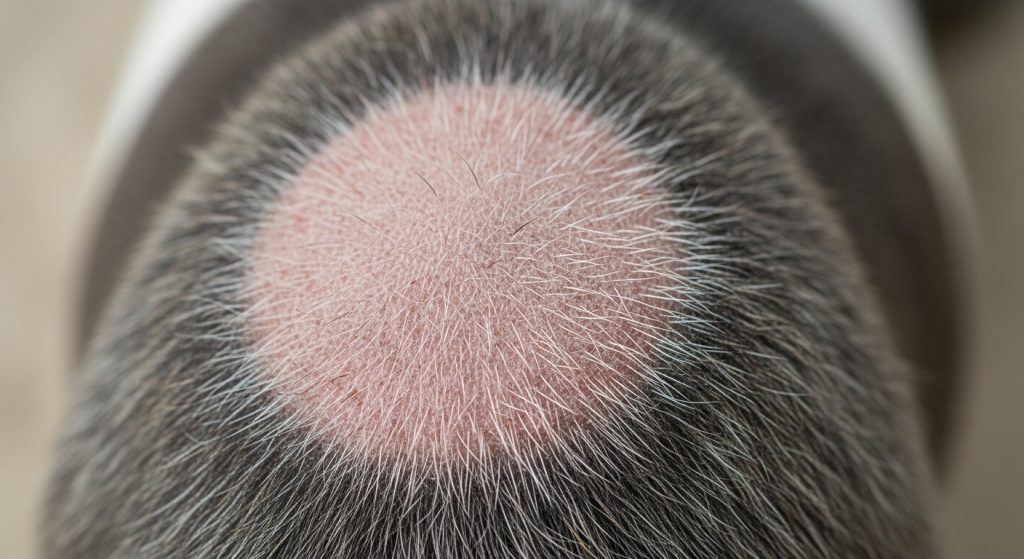
Despite the name, ringworm is actually a fungal infection — not a worm. It gets its name from the classic circular bald patches it creates.
Key signs:
What to do: Vet diagnosis through fungal culture or UV light test. Treatment involves antifungal shampoo, topical creams, and sometimes oral antifungal medication. Clean and disinfect your home thoroughly as ringworm spores survive in the environment.

Hormonal causes of hair loss are extremely common — especially in middle-aged and older dogs. The hair loss is usually symmetrical (same pattern on both sides of the body) and the dog is often not itchy — which is a key clue that hormones may be involved.
The thyroid gland sits in the neck and controls metabolism. When it doesn’t produce enough hormone, almost every system in the body slows down — including hair growth.
Signs of hypothyroidism:
Most commonly affected breeds: Golden Retrievers, Doberman Pinschers, Irish Setters, Boxers, Cocker Spaniels
What to do: Blood test at the vet measures thyroid hormone levels. Treatment is a daily oral medication called levothyroxine — inexpensive, safe, and very effective. Most dogs show significant improvement within 4 to 8 weeks of starting treatment.

Cushing’s disease happens when the body produces too much cortisol — the stress hormone. Excess cortisol literally breaks down skin and hair follicles over time.
Signs of Cushing’s disease:
Most commonly affected breeds: Poodles, Dachshunds, Yorkshire Terriers, Beagles, Boston Terriers. Usually appears in dogs over 6 years old.
What to do: Blood and urine tests confirm the diagnosis. Treatment depends on the cause — medication (trilostane or mitotane) or surgery in some cases. This is a condition that requires long-term veterinary management.
Unneutered or unspayed dogs can sometimes develop hair loss related to imbalances in estrogen or testosterone. The hair loss is typically symmetrical, starting around the tail, groin, and inner thighs.
What to do: Spaying or neutering often resolves this completely. Blood tests confirm the hormonal imbalance.
Some dogs — particularly Boxers, English Bulldogs, and Airedale Terriers — develop predictable, cyclical hair loss on their flanks (sides) every winter as daylight hours decrease.
Key feature: The hair falls out in fall or winter and grows back on its own in spring. The skin underneath often turns dark. The dog is not itchy and feels completely fine.
What to do: Often no treatment is needed. Melatonin supplements can sometimes prevent or reduce the hair loss cycle — ask your vet.

Chronic skin infections don’t just cause itching — over time, they actively damage hair follicles and lead to permanent or semi-permanent hair loss in affected areas.
Staph bacteria invade damaged or irritated skin and create pustules, crusts, and hot red patches. As the infection deepens into hair follicles (folliculitis), hair falls out.
Signs:
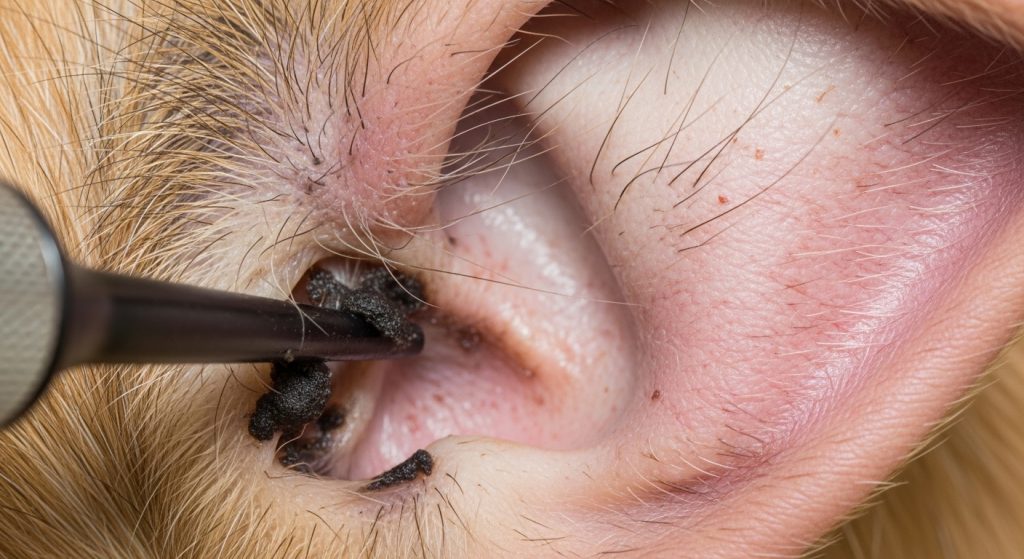
Yeast overgrowth causes chronic skin inflammation that damages follicles over time. The signature smell — musty, like corn chips — is unmistakable.
Most affected areas: Ears, paws (between toes), neck folds, groin, and armpits.
Signs:
What to do for both: Vet-prescribed medicated shampoo, topical treatments, and oral antibiotics or antifungals depending on severity. Consistent treatment for the full prescribed duration is essential — stopping early causes relapse.

Some dogs are simply born with a genetic predisposition to hair loss. No infection, no allergy, no hormonal issue — it’s written in their DNA.
Affects dogs with dilute coat colors — blue (grey) or fawn colored dogs. The pigment clumping in dilute hairs causes the hair shaft to be fragile and break easily.
Commonly affected breeds: Blue Dobermans, Blue Italian Greyhounds, Fawn French Bulldogs, Blue Great Danes
Signs:
A benign, cosmetic condition in certain breeds. Hair gradually thins and disappears from specific areas — usually the ears, temples, chest, or belly — without any underlying disease.
Commonly affected breeds: Dachshunds, Chihuahuas, Manchester Terriers, Boston Terriers, Whippets
What to do: No medical treatment needed. Focus on keeping skin in those areas moisturized and protected from sun damage.
A genetic defect in hair follicle development that causes abnormal hair growth and progressive hair loss. Most commonly seen in Siberian Huskies, Malamutes, and some Spitz-type breeds.

Sometimes hair loss has a purely mechanical cause — something is physically rubbing, pressing on, or damaging the skin repeatedly.
Common physical causes:
What to do:

Certain medications and medical conditions can trigger hair loss as a side effect.
Medications that can cause hair loss:
Post-clipping alopecia: After surgery or grooming where fur is clipped short, some dogs — particularly Nordic breeds like Samoyeds and Huskies — experience very slow or incomplete regrowth. The fur may take 12 to 24 months to grow back fully, or sometimes never returns to its original thickness.
What to do: If you suspect a medication is causing hair loss, never stop the medication on your own. Speak to your vet about alternatives or adjusting the dose.

Chronic stress, trauma, or anxiety can actually disrupt the natural hair growth cycle in dogs — similar to how humans can lose hair during periods of extreme stress.
Common stress triggers:
Signs it might be stress-related:
What to do: Address the underlying anxiety. Increase exercise and enrichment, use calming supplements (melatonin, L-theanine), establish a consistent daily routine, and consult a veterinary behaviorist for severe cases.

These safe, natural approaches can support hair regrowth and skin health alongside proper veterinary care.
Omega-3 fatty acids from fish oil reduce inflammation, nourish hair follicles, and actively promote healthy coat regrowth. This is hands-down the most effective supplement for hair and skin health in dogs.
How to use: Add fish oil capsules or liquid to food daily. Ask your vet for the right dose based on your dog’s weight. Allow 6 to 8 weeks to see visible results.
Applied directly to bald patches, coconut oil moisturizes the skin, fights bacteria and yeast, and creates a healthy environment for hair regrowth.
How to use: Gently massage a small amount of virgin coconut oil onto bald patches daily. You can also add a small amount to food for internal benefits.
Pure aloe vera gel calms irritated skin, reduces inflammation, and supports healing in damaged areas.
How to use: Apply pure, additive-free aloe vera gel to affected skin twice daily. Let it absorb naturally — don’t rinse.
If itching is contributing to the hair loss, regular oatmeal baths break the itch-scratch cycle and give inflamed skin a chance to heal.
How to use: Grind plain oats to a fine powder, dissolve in warm bath water, soak your dog for 10 to 15 minutes, rinse thoroughly. Two to three times per week during flare-ups.
Diluted apple cider vinegar can help with mild yeast-related hair loss by creating an environment where yeast struggles to survive.
How to use: Mix equal parts ACV and water. Apply to affected areas with a cotton ball. Never use on broken or raw skin.
Nutrition directly impacts coat quality. A poor diet lacking essential nutrients will cause dull coat and hair loss even in an otherwise healthy dog.
Key nutrients for healthy fur:
Switch to a high-quality, meat-first dog food if you haven’t already. The difference in coat quality is often visible within 6 to 8 weeks.
🚨 When to Stop Home Remedies and See the Vet

Home remedies support healing — but they cannot fix mange, hormonal disease, ringworm, or deep infections. Know when to escalate.
See your vet immediately if:
Finding the cause of hair loss requires detective work. Your vet may use several diagnostic tools:
| Test | What It Finds |
|---|---|
| Skin scraping | Mites (mange) |
| Fungal culture | Ringworm |
| Blood panel | Thyroid levels, Cushing’s markers |
| Skin biopsy | Follicular dysplasia, deep infections, cancer |
| Urinalysis | Cushing’s disease markers |
| Allergy testing | Environmental allergen identification |
| Elimination diet trial | Food allergy confirmation |
Be ready to tell your vet: when the hair loss started, where it appeared first, whether it’s spreading, whether there’s itching, any recent changes in food or environment, and any other symptoms you’ve noticed.
Depending on the diagnosis, your vet may recommend:
| Treatment | Used For |
|---|---|
| Antifungal medication | Ringworm, yeast infections |
| Antiparasitic medication | Mange, fleas, lice |
| Antibiotics | Bacterial skin infections |
| Levothyroxine | Hypothyroidism |
| Trilostane or mitotane | Cushing’s disease |
| Apoquel or Cytopoint | Allergy-related hair loss |
| Medicated shampoos | Infections, seborrhea, yeast |
| Immunotherapy | Long-term allergy management |
| Melatonin | Seasonal flank alopecia |
| Spay or neuter | Sex hormone-related hair loss |
Once you’ve treated the current problem, these habits will help keep your dog’s coat full and healthy for life:

Dog hair loss feels alarming — but in most cases, it’s completely treatable once you find the cause. Here’s what to do:
Your dog can’t look in a mirror and worry about going bald. But they do feel discomfort, irritation, and pain when something is wrong with their skin. You noticing that bald patch is the first step to getting them back to full health.
A full coat means a healthy dog. And a healthy dog means everything. 🐾❤️
Has your dog experienced hair loss? What was the cause? What treatment worked?
Share your experience in the comments — your story could be exactly what another worried dog owner needs to read today.
If this guide helped you understand what’s going on with your dog, share it with a fellow dog lover. Because every dog deserves to be healthy, comfortable, and fully-furred. 🐶