Physical Address
304 North Cardinal St.
Dorchester Center, MA 02124
Physical Address
304 North Cardinal St.
Dorchester Center, MA 02124

You woke up this morning, looked at your dog — and something was different. There was a crust around his eye. Maybe a little goop in the corner. Maybe something worse — a thick, yellow discharge that wasn’t there yesterday.
Your first thought? “Is my dog okay? Is something seriously wrong with his eye?”
Here’s the truth: eye discharge in dogs is one of the most common health complaints — and it ranges from completely harmless to genuinely urgent. The color, consistency, and amount of discharge tells a very specific story about what’s happening inside your dog’s eye.
Some discharge is normal. Some is a warning. And some needs a vet the same day.
This complete guide will teach you exactly how to read what your dog’s eyes are telling you — and what to do about it.

Yes. And this surprises many dog owners.
Just like humans wake up with “sleep” in the corners of their eyes, dogs do too. During sleep, the eyes continue producing fluid — tears, mucus, and dead cells — and this collects in the corner of the eye overnight. By morning, it dries into a small crust.
This is completely normal if:
This is NOT normal if:
The moment you notice any of those second signs — that’s your cue to pay closer attention. And in some cases, to call your vet immediately.

The color and texture of your dog’s eye discharge is one of the most important diagnostic clues available to you. Learning to read it can save you from unnecessary panic — or help you catch something serious before it gets worse.
What it looks like: Thin, water-like fluid running from the corner of the eye. Sometimes makes the fur below the eye wet or stained.
What it usually means:
Is it serious? Usually mild, but worth monitoring. If it persists more than a few days or worsens — see your vet.
What it looks like: Stringy, rope-like mucus that accumulates in the corner of the eye. Can dry into greyish or whitish crusts.
What it usually means:
Is it serious? Dry eye is a chronic condition that can cause permanent corneal damage if untreated. Don’t ignore this one.
What it looks like: Thick, colored discharge — from pale yellow to bright green. Often crusts heavily overnight, sometimes sealing the eye shut.
What it usually means:
Is it serious? Yes. Yellow or green discharge almost always means infection. This needs veterinary attention — do not wait and hope it resolves on its own.
What it looks like: The fur below the eyes is stained brownish-red or rust-colored. The discharge itself may not be very visible — the stain is the giveaway.
What it usually means:
Is it serious? Usually cosmetic, but the underlying cause (blocked ducts, allergies) should be investigated.
What it looks like: Pink or red-tinged discharge, or visible blood around the eye.
What it usually means:
Is it serious? Absolutely yes. Bloody discharge is an emergency. Call your vet immediately.

Now that you know what the discharge looks like, let’s go deeper into what’s causing it — because the treatment depends entirely on getting the cause right.
Allergies are the number one cause of eye discharge in dogs. When your dog’s immune system reacts to something — pollen, dust mites, mold, certain foods, cleaning products — the eyes respond with inflammation and increased tear production.
Signs allergies are causing the eye discharge:
Breeds most commonly affected:
What to do:
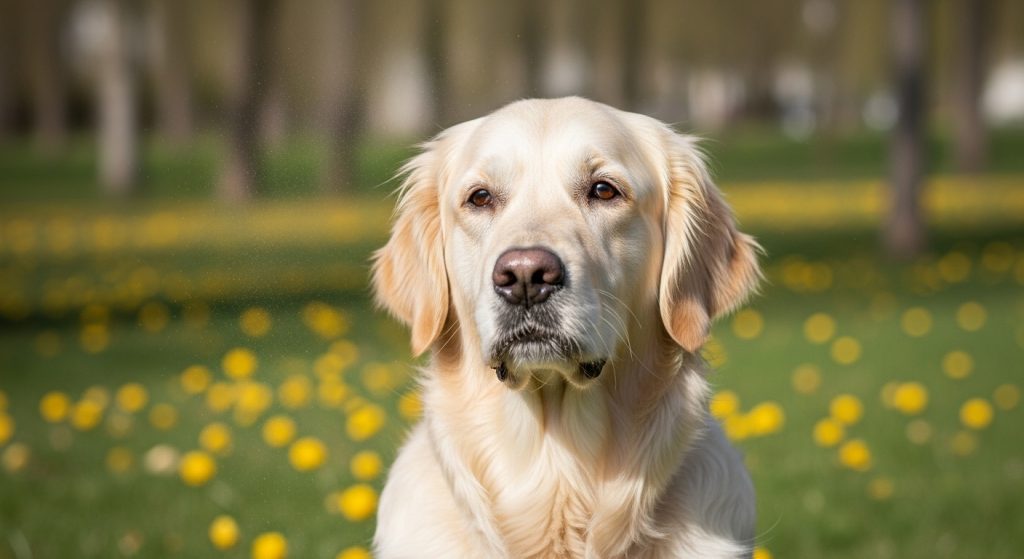
This one confuses a lot of dog owners — “how can a condition called DRY eye cause discharge?”
Here’s how: when the tear glands don’t produce enough watery tears, the eye compensates by producing more mucus instead. That thick, white, rope-like mucus you see in the corner of the eye? That’s often dry eye — not too many tears, but too few of the right kind.
Tears aren’t just for crying. They clean the eye surface, deliver oxygen and nutrients to the cornea, and wash away debris. Without enough tears, the eye surface becomes inflamed, damaged, and vulnerable to infection.
Signs of dry eye:
Breeds most prone to dry eye:
What to do:

Conjunctivitis means inflammation of the conjunctiva — the thin, clear membrane that lines the inside of the eyelid and covers the white part of the eye. When it’s inflamed, the eye looks red and irritated and produces discharge.
In dogs, conjunctivitis can be caused by:
Signs of conjunctivitis:
What to do:

Epiphora simply means an overflow of tears onto the face — not because the eye is producing too many tears, but because the drainage system isn’t working properly.
Your dog’s eye has tiny drainage ducts called nasolacrimal ducts that drain tears from the eye into the nasal passage. When these are blocked, narrow, or malformed, tears have nowhere to go except down the face — causing that characteristic brown staining below the eyes.
Causes of epiphora:
Most affected breeds:
What to do:

The cornea is the clear dome covering the front of the eye. A corneal ulcer is a wound or scratch on that surface — painful, serious, and capable of causing permanent vision loss if not treated quickly.
Corneal ulcers can be caused by:
Signs of a corneal ulcer:
What to do:

These two conditions involve the eyelids themselves — and both can cause significant discharge and discomfort.
Entropion (Eyelid Rolls Inward) The eyelid rolls inward so that the eyelashes and skin constantly rub against the corneal surface. Imagine having your own eyelashes scratching your eyeball with every blink — that’s what entropion feels like for your dog.
Signs: Constant tearing, squinting, discharge, corneal scarring in untreated cases
Most affected breeds: Chow Chows, Shar Peis, Bulldogs, Rottweilers, Golden Retrievers, Labrador Retrievers
Treatment: Surgical correction — the eyelid is repositioned. Results are usually excellent.
Ectropion (Eyelid Rolls Outward) The opposite problem — the lower eyelid droops outward, exposing the inner eyelid surface. This creates a “pocket” that collects debris, moisture, and bacteria, leading to chronic irritation and discharge.
Signs: Droopy lower eyelid, chronic watery or mucoid discharge, redness of exposed inner eyelid
Most affected breeds: Basset Hounds, Saint Bernards, Bloodhounds, Cocker Spaniels, Mastiffs
Treatment: Mild cases managed with regular cleaning and lubricating drops. Severe cases corrected surgically.
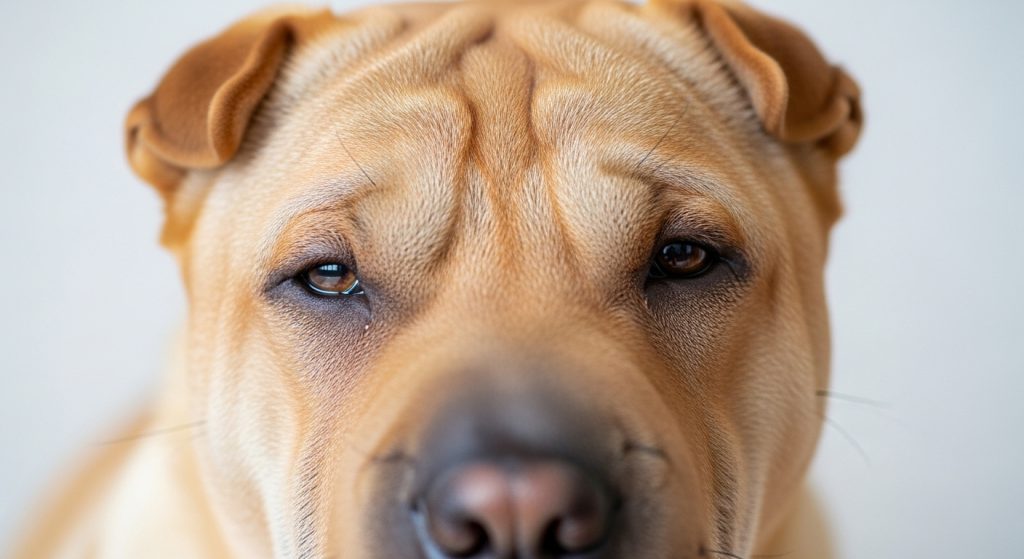
Glaucoma is a condition where the pressure inside the eyeball builds up to damaging levels. It’s painful, it’s progressive, and without treatment, it leads to blindness.
Unlike most causes of eye discharge, glaucoma is not primarily an eye surface problem — it’s internal. But it causes the eye to produce discharge as part of the overall inflammation response.
Signs of glaucoma:
Breeds most at risk:
What to do:

Some breeds are anatomically predisposed to eye discharge — not because of disease, but because of the way they’re built.
Brachycephalic (Flat-Faced) Breeds Pugs, French Bulldogs, Bulldogs, Shih Tzus, Boxers, and Pekingese have:
These breeds almost universally require more frequent eye cleaning and monitoring than other dogs. Many need lifelong lubricating eye drops.
Large, Droopy-Eyed Breeds Saint Bernards, Bloodhounds, and Basset Hounds with prominent ectropion are prone to chronic discharge collection in their droopy lower lids.
Breeds with Heavy Facial Hair Poodles, Maltese, Shih Tzus, and Old English Sheepdogs have hair that grows near or into the eye area, causing chronic irritation and excess tearing.

Cleaning your dog’s eyes is something every dog owner should know how to do — safely, gently, and effectively.
What you’ll need:
Step-by-step cleaning:
Step 1 — Prepare Wash your hands thoroughly. Have everything ready before you start — you don’t want to be fumbling with supplies while restraining your dog.
Step 2 — Soften the crust Soak a gauze pad or cotton ball with saline or cooled boiled water. Hold it gently against the crust for 10–15 seconds to soften it. Never pick or scrape at dry crust — you risk scratching the delicate skin around the eye.
Step 3 — Wipe gently With a fresh damp pad, wipe from the inner corner of the eye outward — always away from the eye, never toward it. Use each pad only once, then discard. Never wipe back and forth — this spreads bacteria.
Step 4 — Use a fresh pad for each eye Even if both eyes look similar, always use a separate clean pad for each eye. This prevents cross-contamination between eyes.
Step 5 — Dry the area Gently pat the cleaned area dry with a clean, soft cloth. Moisture trapped in skin folds breeds bacteria and yeast.
Step 6 — Reward Give a treat and praise. Make this a positive experience so your dog tolerates it without stress.
How often to clean:
These mistakes are common — and some can make things significantly worse.
There’s a lot of advice online about home remedies for dog eye discharge. Some of it is safe and helpful. Some of it is ineffective. And some of it can genuinely harm your dog.
✅ Safe and Helpful:
⚠️ Proceed with Caution:
❌ Do NOT Use:
The bottom line on home remedies: they are for cleaning and comfort only — not for treating infections, ulcers, dry eye, or any medical condition. If your dog has a medical eye problem, they need a veterinarian.

Clean it and monitor (no vet needed yet) if:
See your vet this week if:
See your vet within 24 hours if:
Emergency — call your vet immediately if:

Depending on the diagnosis, your vet may prescribe or recommend:
Antibiotic Eye Drops or Ointment For bacterial infections and corneal ulcers. Common options include chloramphenicol, gentamicin, neomycin, and ciprofloxacin. These must be completed for the full course — stopping early allows bacteria to develop resistance.
Anti-inflammatory Eye Drops Steroid drops (like prednisolone acetate) reduce inflammation in allergic or immune-mediated conditions. Important: steroid drops must never be used with a corneal ulcer — they can cause catastrophic worsening. Your vet will rule out ulcers before prescribing.
Cyclosporine or Tacrolimus Eye Drops The mainstay of dry eye treatment. These immunomodulating drops stimulate the lacrimal gland to produce tears. Most dogs need them twice daily for life — but they work remarkably well.
Lubricating Eye Drops (Artificial Tears) Used for dry eye support, brachycephalic breeds, post-surgery, and general corneal comfort. These are safe for regular long-term use and available over the counter — but ask your vet which formulation is appropriate.
Antiparasitic Treatment If a parasite (like Thelazia eye worms — rare but possible) is involved, specific treatment is prescribed.
Surgery Required for: entropion, ectropion, nasolacrimal duct blockage, glaucoma, severe corneal ulcers, certain tumors, and cherry eye (prolapsed third eyelid gland).
Systemic Antibiotics or Antivirals When eye infection is part of a wider illness — distemper, herpesvirus — systemic treatment is needed alongside local eye treatment.

Prevention isn’t always possible — especially for genetic and breed-related conditions. But there’s a great deal you can do to minimize risk and catch problems early.
Daily habits that protect your dog’s eyes:
Monthly self-checks at home:
Once a month, look carefully at your dog’s eyes in good light. You’re checking for:
Catching changes early is the most powerful tool you have.

Puppies need special attention when it comes to eye discharge because:
Puppies are born with their eyes sealed shut. Their eyes open between 10–14 days of age. During this time, if discharge or swelling appears around the closed eyelids — this is a veterinary emergency called Neonatal Ophthalmia (infection behind the closed eyelid). It can destroy vision permanently within hours if untreated.
Once eyes open:
Distemper Warning: Canine distemper virus causes severe eye discharge — usually thick, yellow-green pus — alongside respiratory and neurological symptoms. This is why vaccination is not optional. An unvaccinated puppy with eye discharge and a runny nose needs emergency veterinary care.

There’s something particularly distressing about eye problems in dogs. The eyes are so expressive — so central to your connection with your dog — that seeing them look wrong feels deeply alarming.
If your dog has a chronic eye condition, or you’ve been through a scary episode like a corneal ulcer or glaucoma scare, that worry is completely valid.
What helps is knowing what you’re dealing with.
Most eye discharge has a treatable cause. Most dogs with well-managed chronic eye conditions — dry eye, epiphora, entropion — live completely happy and comfortable lives. Many conditions that sound serious (corneal ulcers, conjunctivitis) resolve completely with the right treatment.
The eyes looking wrong doesn’t mean your dog is suffering permanently. It means he needs help — and you’re already looking for it.
That matters more than you know.
Every morning when you look at your dog, his eyes tell you something. Most days, they tell you he’s happy, healthy, and ready for breakfast and a walk.
On the days they tell you something else — when there’s a color that wasn’t there before, a crust that looks different, a squint that makes your heart drop — now you know what to look for. Now you know what each type of discharge means. And now you know exactly when to act.
You don’t have to be a vet to protect your dog’s eyes. You just have to pay attention.
And you already do.
💬 Has your dog ever had eye discharge? What was the cause and what helped? Share in the comments — your experience could help another dog owner spot something important in their own dog’s eyes.