Physical Address
304 North Cardinal St.
Dorchester Center, MA 02124
Physical Address
304 North Cardinal St.
Dorchester Center, MA 02124


One morning you wake up, look at your dog, and notice something strange — a red, fleshy lump poking out of the corner of their eye. It was not there yesterday. Your dog is rubbing their face on the floor, blinking more than usual, and you have no idea what it is.
That little red lump has a name. It is called Cherry Eye — and while it looks alarming, it is one of the most common eye conditions in dogs. The good news is that it is treatable. The bad news is that if you ignore it, it can lead to serious, permanent eye damage.
In this guide, you will learn exactly what cherry eye is, why it happens, which dog breeds are most at risk, what your treatment options are, and what you can realistically expect after surgery. Everything a dog owner needs to know — explained simply and clearly.
Tom got his first Bulldog puppy at 10 weeks old. By week 14, he noticed a small pink bump at the corner of one eye. He assumed it was a bug bite. By week 16, it had doubled in size and his puppy was constantly pawing at her face. The vet diagnosed it immediately — Cherry Eye. Tom wished he had come in sooner.
Dogs, unlike humans, have three eyelids. Two you can see — the upper and lower. The third is a hidden eyelid in the inner corner of the eye, called the nictitating membrane or the third eyelid. Inside this third eyelid sits a small gland that produces about 30 to 50 percent of your dog’s total tear production.
Cherry eye happens when this gland slips out of its normal position and pops through the third eyelid, becoming visible as a red, round, swollen lump in the inner corner of the eye. It looks a lot like a small cherry — which is exactly where the name comes from.
It is not a tumor. It is not caused by an injury. It is simply a gland that has prolapsed out of place — usually because the connective tissue holding it in position is weak.
That gland is extremely important. It produces tears that keep the eye moist and healthy. If left untreated or if the gland is damaged, your dog can develop dry eye (Keratoconjunctivitis Sicca) — a painful, lifelong condition that requires daily medication.

Cherry eye can technically happen to any dog, but certain breeds are far more likely to develop it. This is because the condition is largely genetic — some breeds are simply born with weaker connective tissue around the third eyelid gland.
If you own any of the breeds listed above, make it a habit to check their eyes during every grooming session. Early detection means simpler treatment and a much faster recovery.

Cherry eye is usually easy to spot once you know what you are looking for. The most obvious sign is the red lump itself. But there are other symptoms that come with it, especially as the condition progresses.
See a vet immediately if the lump is growing quickly, if there is yellow or green discharge, if your dog cannot open the eye, or if the eye surface looks cloudy or dull. These are signs of secondary infection or early dry eye developing.

Maria noticed cherry eye in her Beagle puppy and decided to wait and see, hoping it would resolve itself. For two weeks, it seemed to come and go. By week three, it was permanently protruded. By week six, the gland was dry, swollen, and infected. Her vet told her that if she had come in at week one, the repair would have been straightforward. Now it required more complex surgery.
This is one of the most common questions vets hear — and the honest answer is: almost never. In very early stages, a cherry eye that appears and disappears on its own might occasionally resolve with gentle massage. But once the gland is fully prolapsed and stays out permanently, it will not go back on its own.
Every week the gland stays exposed, it dries out, gets irritated, and becomes more inflamed. The longer you wait, the harder the repair becomes — and the higher the chance of permanent tear gland damage.
Do not try to push the gland back in yourself at home without vet guidance. Improper handling can damage the gland and surrounding tissue, making surgical repair more complicated.
There are two main approaches to treating cherry eye: surgical repair and medical management. In almost all cases, surgery is the recommended and most effective long-term solution. Medical treatment alone is typically used as a short-term measure while preparing for surgery.
There are two main surgical techniques used by veterinary ophthalmologists today:
The old approach used to be simple removal of the gland. This is now considered outdated and is strongly discouraged. Removing the gland permanently reduces tear production and almost always leads to dry eye later in life, requiring lifelong daily eye drops.
While surgery is being planned, or in very mild early-stage cases, your vet may prescribe:
Medical treatment does not fix cherry eye — it only manages the symptoms. Think of it as a bridge to surgery, not a substitute. Most vets recommend scheduling surgery within 2 to 4 weeks of diagnosis.
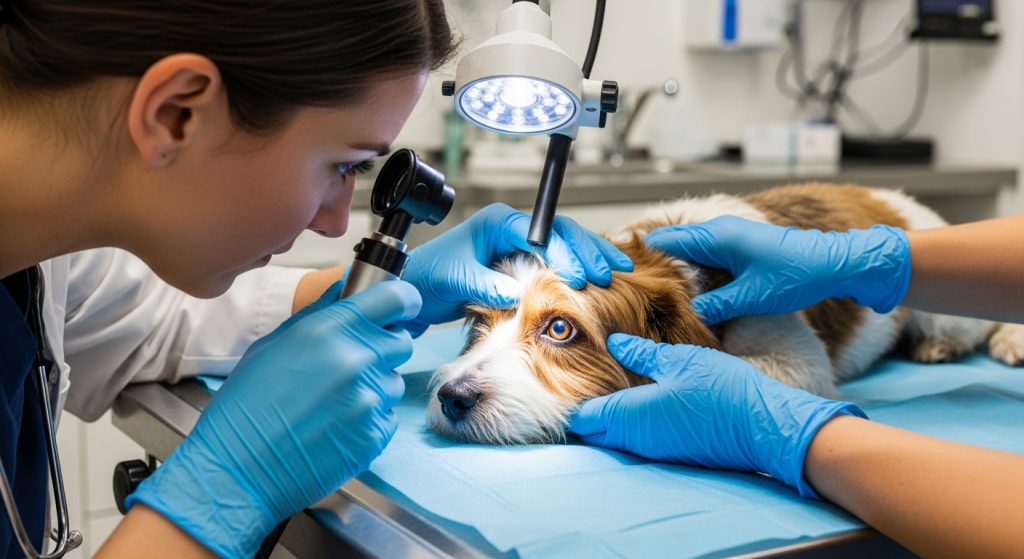
After her French Bulldog’s cherry eye surgery, Lisa was nervous about the recovery. The first three days were the hardest — her dog hated the cone and kept trying to paw at her eye. But by day seven, the swelling had reduced dramatically. By week three, you could barely tell anything had happened. Six months later, her dog’s eyes look perfectly normal and healthy.
Cherry eye surgery is a routine procedure for experienced vets and usually takes under 30 minutes per eye. Here is what to expect during recovery:

One of the first things owners ask after a diagnosis is how much this is going to cost. The honest answer is that it varies depending on your location, the vet’s experience, and whether one or both eyes are affected.
Pet insurance can cover cherry eye surgery if the policy was in place before the diagnosis. If you own a high-risk breed like a Bulldog or Beagle, getting pet insurance before any eye issues appear is a smart financial decision.

Yes — cherry eye can recur after surgical repair, though this is not the most common outcome. Recurrence rates vary between 5 and 20 percent depending on the surgical technique used, the surgeon’s experience, and the individual dog’s anatomy.
If cherry eye comes back after surgery, do not panic. Return to your vet as early as possible. A second repair done early is much simpler than waiting until the gland is severely inflamed again.

Here is the honest truth — because cherry eye is largely genetic, you cannot fully prevent it in predisposed breeds. But there are things you can do to reduce the risk and catch it as early as possible.
Early detection is the closest thing to prevention. A cherry eye caught in its first few days — when the gland still slips in and out — is far easier and cheaper to treat than one that has been ignored for weeks.

Is cherry eye painful for dogs?
Cherry eye itself is not acutely painful, but it is irritating and uncomfortable. The exposed gland gets dry and inflamed over time, which causes increasing discomfort. Dogs will paw at the eye, squint, and show signs of irritation. Left untreated, it becomes increasingly uncomfortable and can lead to painful dry eye.
Can I massage cherry eye back in at home?
In very early cases, some vets teach owners a gentle massage technique to temporarily push the gland back into position. However, this is only a temporary measure and must be done correctly to avoid causing damage. Always get vet guidance before attempting this — it does not replace surgery for a fully prolapsed gland.
Will my dog go blind from cherry eye?
Cherry eye itself does not cause blindness. However, if it is left untreated and the tear gland is permanently damaged, the resulting dry eye can cause chronic corneal damage, scarring, and in severe long-term cases, vision impairment. This is exactly why prompt treatment matters.
Can both eyes get cherry eye?
Yes. In predisposed breeds, it is quite common for both eyes to eventually develop cherry eye. Some dogs develop it in both eyes simultaneously, while others get it in one eye first and then the other months or even years later. Your vet will monitor both eyes after the first occurrence.
At what age does cherry eye typically appear?
Cherry eye most commonly appears in dogs under 2 years of age, as the connective tissue is still developing and weaker in young dogs. However, it can occur at any age. If your puppy is a high-risk breed, the first year of life is the most important time to watch for it.
Is cherry eye surgery risky?
Cherry eye surgery is considered a routine, low-risk procedure when performed by an experienced vet. The risks are the same as any minor surgery under anesthesia — which are generally very low in healthy young dogs. The risk of not treating it is far greater than the surgical risk.
That little red lump in your dog’s eye is not something to wait and see about. Cherry eye is a manageable, treatable condition — but only if you act on it early. Every day that exposed gland sits outside, drying out and getting inflamed, is a day your dog is uncomfortable and the repair becomes more complex.
The good news is that the vast majority of dogs who get timely surgical treatment recover completely. Their eyes look normal, they produce healthy tears, and they go on to live full, happy lives without any ongoing eye problems.
Your dog cannot tell you their eye hurts. But they are telling you in every paw rub, every squint, and every time they turn away from bright light. Now that you know what to look for — you can act fast and give them the relief they need.
If you found this helpful, share it with other dog owners — especially anyone who owns a Bulldog, Beagle, or Cocker Spaniel. And if you have a question about your dog’s specific situation, leave it in the comments below. Happy to help.