Physical Address
304 North Cardinal St.
Dorchester Center, MA 02124
Physical Address
304 North Cardinal St.
Dorchester Center, MA 02124

You’re giving your dog their evening cuddle — and suddenly you notice it.
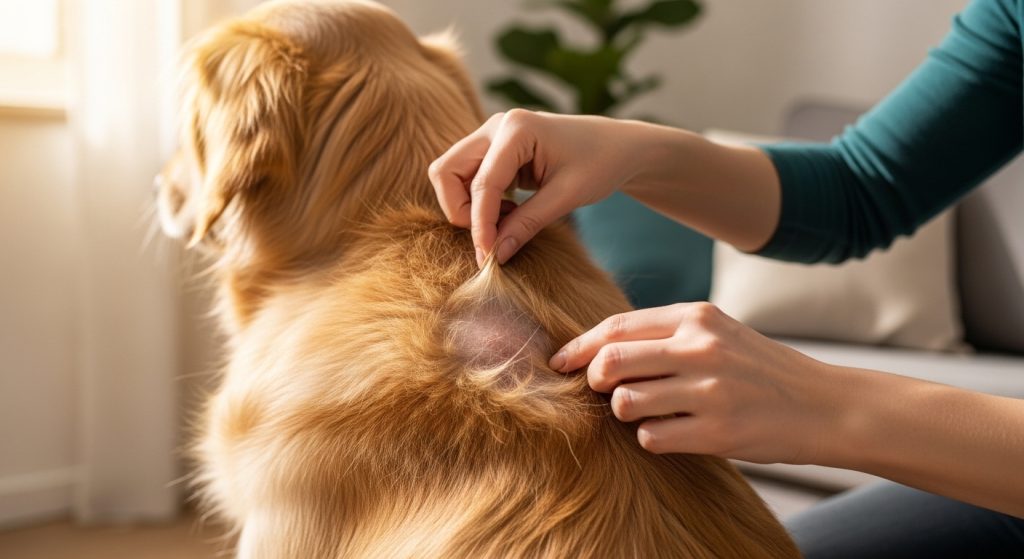
A patch of missing fur. Or maybe clumps of hair on the couch, the floor, your favorite black shirt. You run your hand across their coat and more comes out than it should.
Your stomach drops.
“Is my dog sick? Is something seriously wrong?”
First — take a breath. You are not a bad pet owner. Fur loss in dogs is one of the most common problems that dog owners face around the world. Sometimes it’s nothing serious. Sometimes it needs attention. But almost always — it is treatable.
In this guide, I’m going to explain exactly why dogs lose fur, what the warning signs are, and most importantly — what you can actually do about it.
Let’s start from the beginning. 🐾
Before we panic, let’s understand one thing clearly.
Not all fur loss is a problem.
All dogs shed. Some shed a little. Some shed so much it feels like you’re living inside a fur factory. Breeds like German Shepherds, Huskies, Labrador Retrievers, and Golden Retrievers are known for heavy shedding — especially during spring and fall when they “blow their coat.”
This is completely normal.
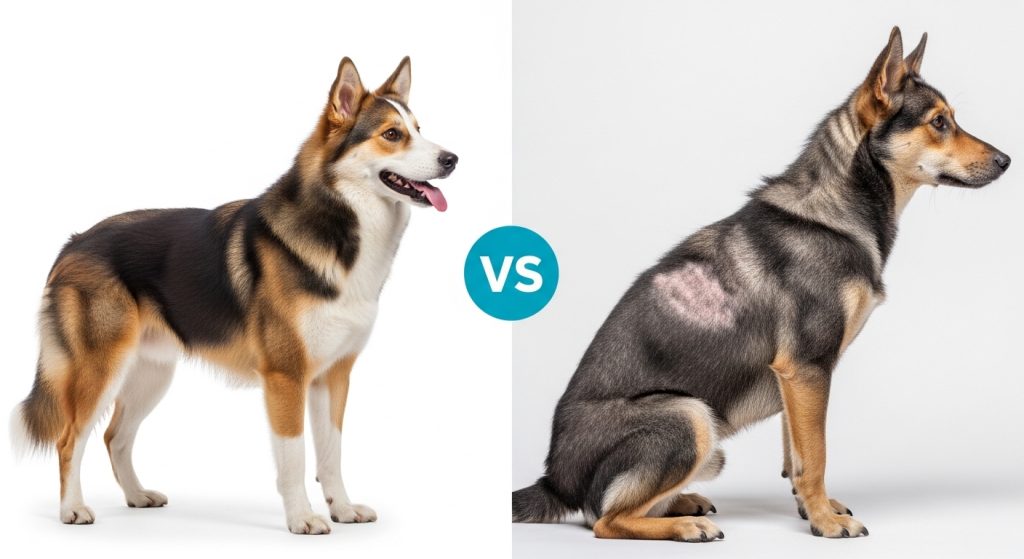
But there is a difference between normal shedding and real fur loss — also called alopecia in medical terms.
Here’s how to tell them apart:
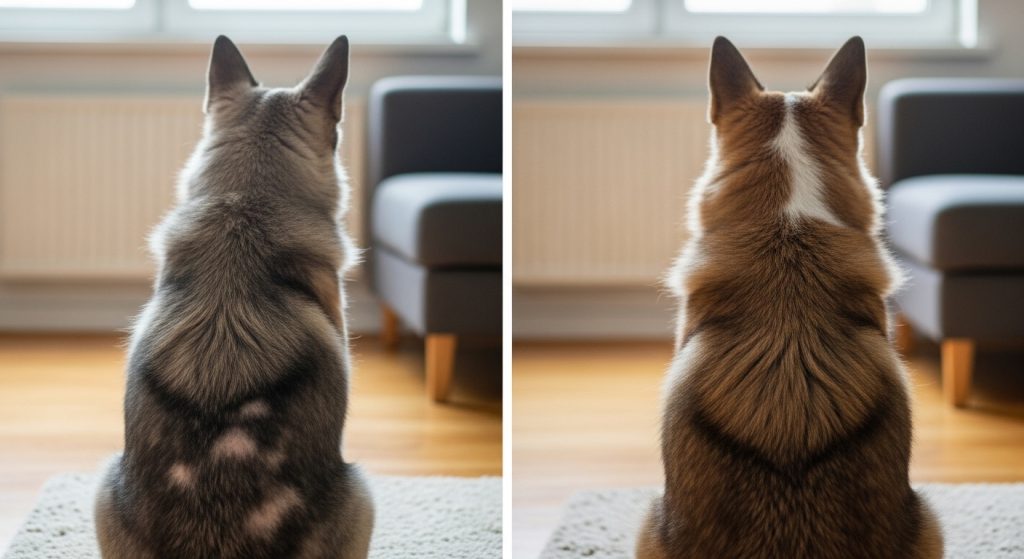
If your dog has bald patches, is scratching constantly, or their skin looks red and unhappy — that’s when it’s time to investigate further.
There is never just one answer. Fur loss in dogs can happen for many different reasons. Let me walk you through each one so you can figure out what’s going on with your dog.
This is the number one cause of fur loss in dogs.
Just like humans, dogs can be allergic to all kinds of things. And when they have an allergic reaction, they scratch. They lick. They chew at their skin constantly. And all that scratching and biting damages the fur follicles — causing the fur to fall out.
What can dogs be allergic to?
Signs your dog’s fur loss is allergy-related:
What to do: Talk to your vet about an elimination diet to find food allergies. For environmental allergies, antihistamines or prescription allergy medication can help significantly.
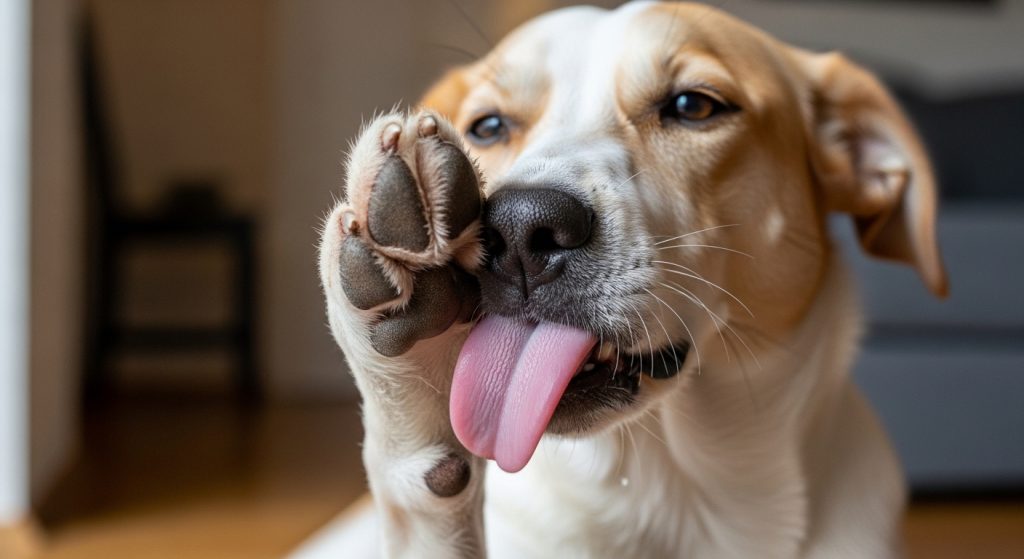
This one makes most owners’ skin crawl — but it’s extremely common.
Fleas are tiny but they cause massive damage. A dog who is allergic to flea saliva can lose entire patches of fur from just a few flea bites. This is called Flea Allergy Dermatitis (FAD) and it’s incredibly itchy and uncomfortable for your dog.
Mange is caused by mites — microscopic bugs that burrow into your dog’s skin. There are two types:
Signs of parasite-related fur loss:
What to do: Visit your vet immediately. Mange needs prescription treatment. For fleas, a monthly flea prevention treatment is essential — and treat your home and bedding too, not just the dog.
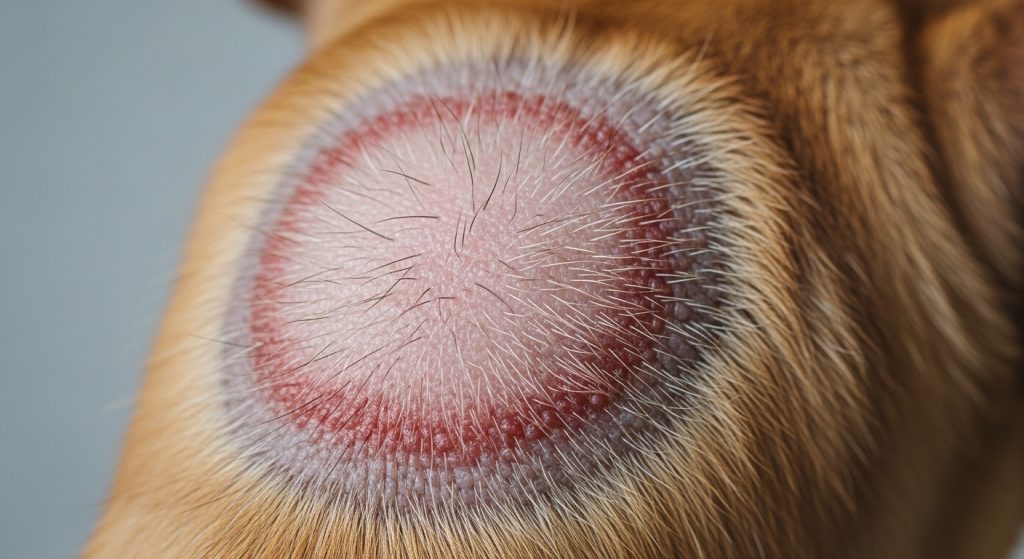
Don’t let the name fool you. Ringworm is not a worm. It’s a fungal infection — and it causes very specific, circular bald patches on your dog’s skin.
The fur loss from ringworm looks different from other causes. It usually appears as:
Ringworm is contagious — to other pets and to humans. So if you notice ring-shaped bald patches on your dog, take it seriously.
What to do: Your vet will do a simple test (UV light or culture) to confirm ringworm. Treatment usually involves antifungal shampoo, topical cream, and sometimes oral antifungal medication. Treatment takes 4–6 weeks.
Sometimes the problem isn’t on the outside — it’s on the inside.
Your dog’s hormones control almost everything, including fur growth. When hormones go out of balance, fur can fall out — often in a very specific, symmetrical pattern (same spot on both sides of the body).
The most common hormonal causes of fur loss:
Hypothyroidism — When the thyroid gland doesn’t produce enough thyroid hormone. This slows down the entire body — including fur growth.
Signs include:
Cushing’s Disease (Hyperadrenocorticism) — The body produces too much cortisol. This is more common in middle-aged to older dogs.
Signs include:
What to do: Both conditions require a vet diagnosis through blood tests. Both are very manageable with medication once diagnosed — and most dogs improve dramatically with treatment.
You truly are what you eat — and so is your dog’s coat.
A dog who isn’t getting the right nutrients will show it in their fur first. The coat becomes dull, dry, and brittle. Then the fur starts to fall out.
Nutrients that are critical for a healthy dog coat:
Signs of nutrition-related fur loss:
What to do: Switch to a high-quality dog food with real meat as the first ingredient. Add fish oil supplements to their diet — this alone can make a dramatic difference within 4–6 weeks.
Yes — dogs can lose fur from stress. Just like humans lose hair during difficult periods, dogs do the same.
Stressful events that can trigger fur loss:
Stress-related fur loss usually looks like:
What to do: Identify and reduce the source of stress. Increase exercise and mental stimulation. Consider calming supplements like L-theanine or CBD for dogs. In severe cases, talk to your vet about anxiety medication.
Sometimes, bacteria get into the skin — often through a small cut, insect bite, or area of irritation — and cause an infection called pyoderma.
This infection damages the skin and fur follicles, causing fur to fall out in the affected area.
Signs of pyoderma:
What to do: This needs veterinary treatment — usually antibiotics (either topical or oral) for 3–6 weeks. Do not ignore skin infections — they can spread and get much worse quickly.
While some causes of fur loss need vet treatment, there are real things you can do at home to support your dog’s coat health.
This is the single most impactful thing you can add to your dog’s diet.
Fish oil is rich in Omega-3 fatty acids — specifically EPA and DHA — which directly support skin barrier function and fur growth. Most dogs who are given fish oil daily show visible coat improvement within 4–8 weeks.
How much to give: A general guideline is 20mg of EPA+DHA per pound of body weight per day. Always buy fish oil made for pets or human-grade fish oil with no additives.
Most cheap dog shampoos strip the natural oils from your dog’s skin — making everything worse.
Look for shampoos that are:
Avoid anything with artificial fragrances, sulfates, or parabens.
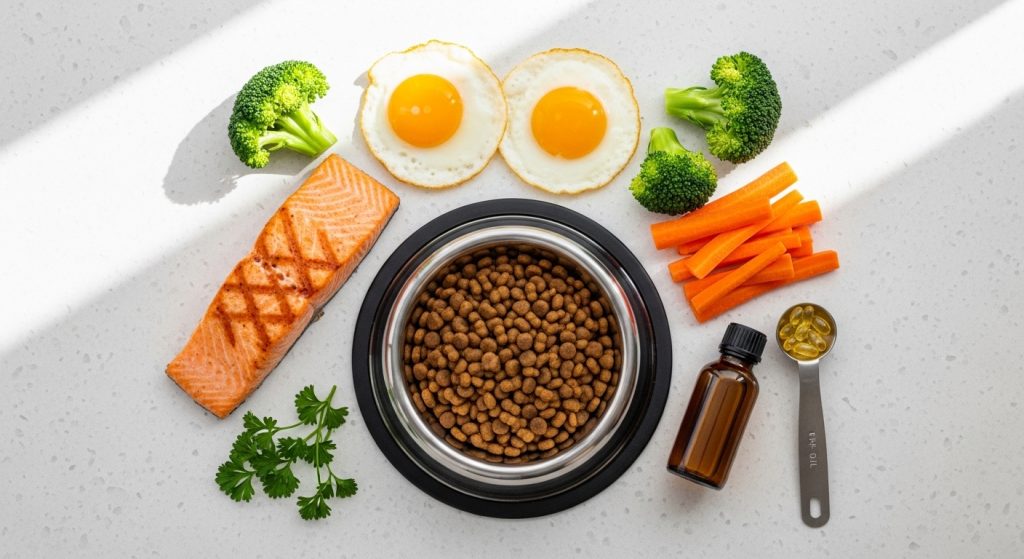
You don’t have to completely change your dog’s diet. Sometimes just adding a few real foods makes a huge difference:
For localized dry patches or minor irritation, virgin coconut oil applied directly to the skin can help.
It has natural antifungal and antibacterial properties, and it moisturizes dry skin beautifully. Apply a small amount to the affected area and let it absorb. Most dogs will also lick it — which is fine in small amounts.
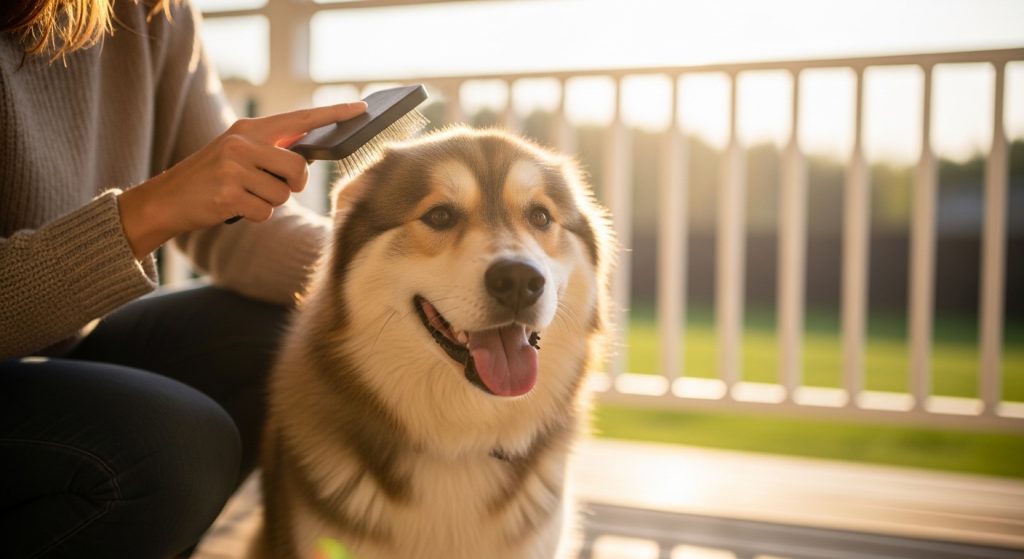
Brushing your dog regularly does more than just remove loose fur. It:
For heavy-shedding breeds, brush at least 3–4 times a week. For short-coated breeds, once a week is usually enough.
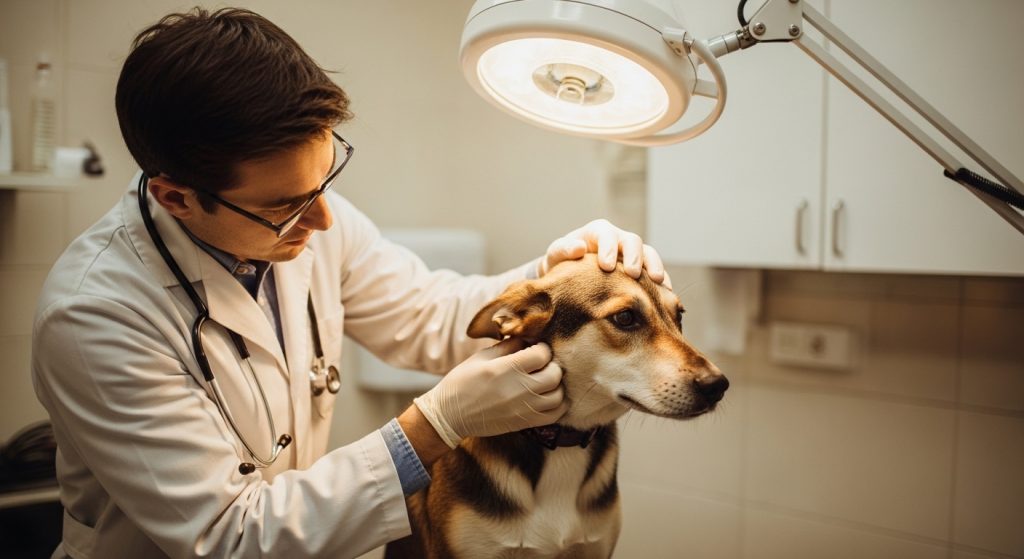
Home remedies are great for maintenance — but some situations absolutely need professional help.
Go to the vet if:
Do not wait. Skin conditions — especially infections and mange — get significantly worse without treatment. The earlier you catch it, the easier (and cheaper) it is to treat.
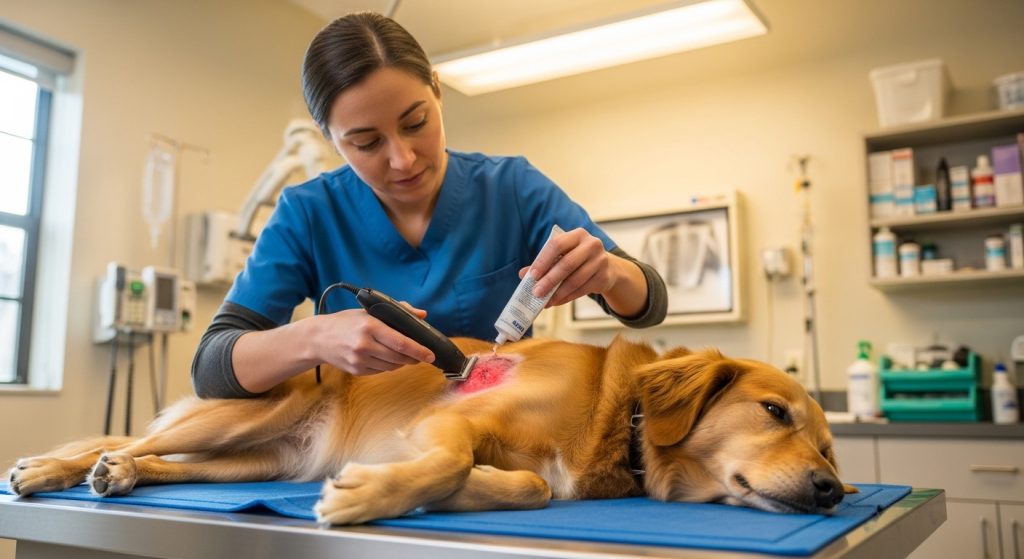
Depending on the cause, your vet may recommend:
| Condition | Common Treatment |
|---|---|
| Allergies | Antihistamines, Apoquel, Cytopoint injection, steroids |
| Fleas | Monthly flea prevention (NexGard, Bravecto, Simparica) |
| Mange | Ivermectin, Bravecto, or Revolution |
| Ringworm | Antifungal shampoo + oral medication |
| Hypothyroidism | Daily thyroid hormone replacement pill |
| Cushing’s Disease | Trilostane or mitotane medication |
| Bacterial infection | Oral or topical antibiotics |
| Nutritional deficiency | Diet change + targeted supplements |
This is the question everyone wants answered.
The honest answer — it depends on the cause.
The key is patience. Fur follicles need time to recover and restart the growth cycle. As long as the underlying cause is treated, the fur will come back.
Prevention is always better than treatment. Here’s what you can do every day to keep your dog’s coat thick, shiny, and healthy:
Seeing your dog’s beautiful coat thinning or disappearing is heartbreaking. But here is the truth that every dog owner needs to hear:
Fur loss is almost always treatable.
Whether it’s a diet change, a flea treatment, a medicated shampoo, or a simple supplement — most dogs who receive the right care grow their full coat back and live completely happy, itch-free lives.
You noticed. You cared enough to look for answers. That already makes you a great dog parent.
Now go get your pup the help they need — and look forward to the day you’re covered in their beautiful fur again. 🐾
Is your dog dealing with fur loss right now? Tell me in the comments what you’ve noticed — I’ll try to help you figure out where to start. 👇