Physical Address
304 North Cardinal St.
Dorchester Center, MA 02124
Physical Address
304 North Cardinal St.
Dorchester Center, MA 02124


You just brought home the most adorable puppy in the world. You’re excited. Your family is excited. Even your neighbor is excited.
But then comes the night.
You put your puppy in the crate, turn off the lights… and the crying starts. And it doesn’t stop.
You lie in bed wondering — “Did I do something wrong? Is my puppy okay? Should I go back?”
If this sounds familiar, you are not alone. Thousands of new dog owners go through this exact same thing every single night. The good news? This is completely normal — and it is completely fixable.
In this guide, I’m going to walk you through exactly why your puppy cries in the crate, what mistakes most owners make, and the step-by-step way to make your puppy feel safe, calm, and happy inside their crate.
Let’s dive in. 🐾
Before we fix the problem, we need to understand it.
Your puppy isn’t crying to make your life difficult. They’re crying because they are scared, confused, and lonely.
Think about it from the puppy’s perspective. Just a few days ago, they were sleeping curled up with their mom and siblings — warm, safe, surrounded by heartbeats. Now suddenly, they are in a strange house, in a small box, completely alone in the dark.
Of course they’re going to cry.
Here are the most common reasons puppies cry in the crate:
Understanding the why is the first step. Now let’s talk about the how.
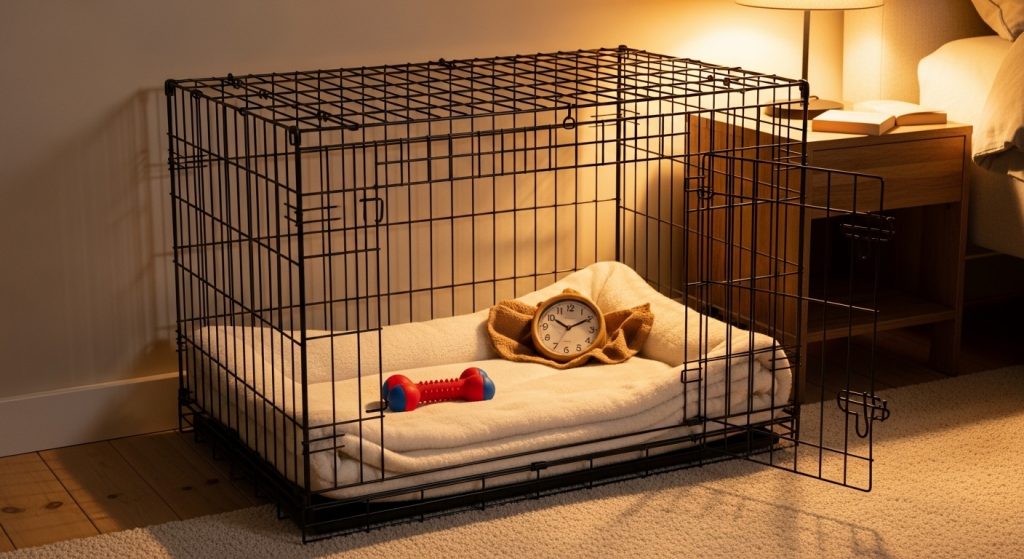
Most people make one of these three mistakes — and they don’t even realize it.
This is the most common one. Your puppy cries. You feel terrible. You go pick them up.
What you just taught your puppy: “If I cry loud enough, I get out.”
Now your puppy has learned that crying = freedom. And the crying gets worse every night.
This doesn’t mean you should ignore your puppy completely. But there’s a right way and a wrong way to respond — and we’ll cover that below.
Some owners just put the puppy in, lock the door, and walk away. No introduction. No comfort. No buildup.
This immediately teaches the puppy that the crate is scary. You’ve created a negative association before you even started.
If you send your puppy to the crate when they do something bad, they will start to hate it. The crate should always be a happy, safe place — never a timeout room.
This method works. It takes patience and consistency, but it works. Most puppies are sleeping through the night in their crate within 1 to 2 weeks when you follow these steps.
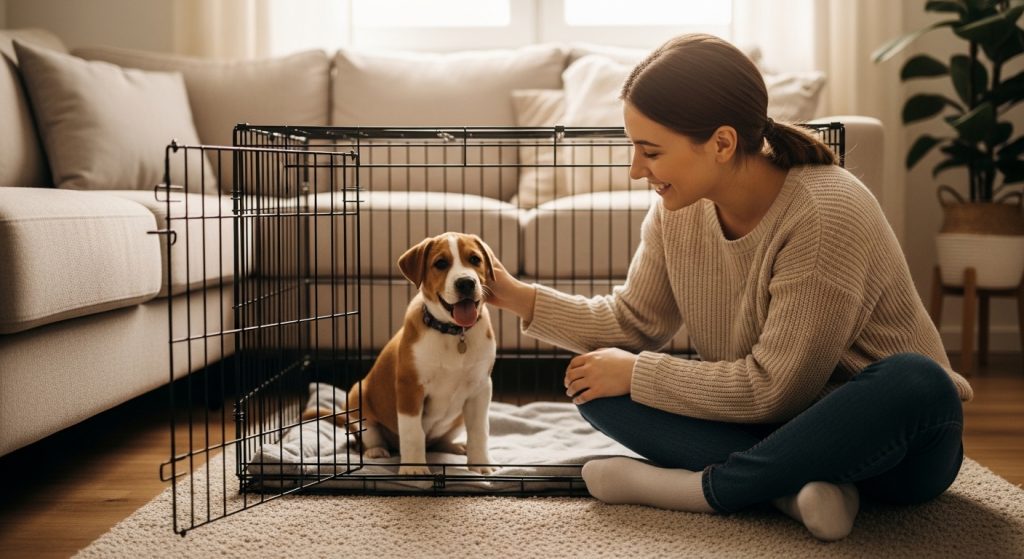
In the wild, dogs are den animals. They naturally seek out small, cozy, enclosed spaces to feel safe. Your job is to make the crate feel like that — a warm, personal den.
Here’s how:
Where should the crate go?
For the first few weeks, keep the crate in your bedroom — close to your bed if possible. Puppies feel safer when they can hear and smell you. Once they’re comfortable, you can slowly move the crate to another room.
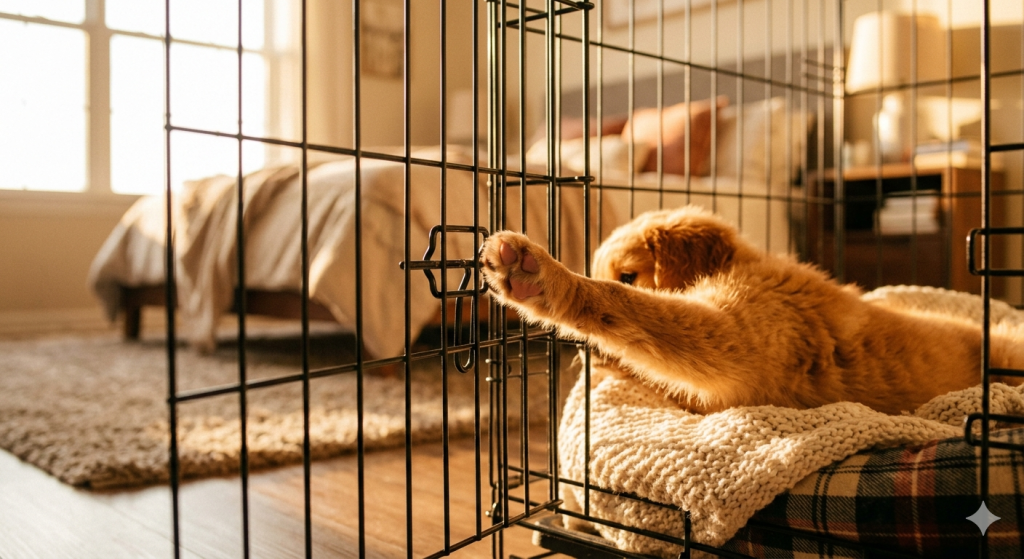
Never rush this step. The goal is to build a positive association with the crate before you ever close the door.
Day 1–2: Open Door Only
Leave the crate door open. Toss some treats inside. Let your puppy walk in and out freely. Don’t force anything. Praise them every time they go near or inside the crate.
Day 3–4: Feed Meals Inside the Crate
Start feeding your puppy their regular meals inside the crate — with the door open at first. This creates a powerful positive association. Food = crate = good thing.
Day 5–6: Close the Door Briefly
After your puppy eats inside, gently close the door for just a minute or two. Stay nearby. Open it before they get anxious. Gradually increase the time.
Day 7+: Practice Crating During the Day
Now start putting your puppy in the crate for short naps during the day. Give them a Kong stuffed with peanut butter or a frozen treat. Walk away, but stay close. Return before they start crying.
Puppies thrive on routine. If every night looks the same, their body and brain learn to expect sleep — and the crying reduces dramatically.
Here’s a routine that works:
The exercise part is critical. A tired puppy is a quiet puppy. A 10-week-old puppy needs 20–30 minutes of active play before bed. An older puppy needs more.
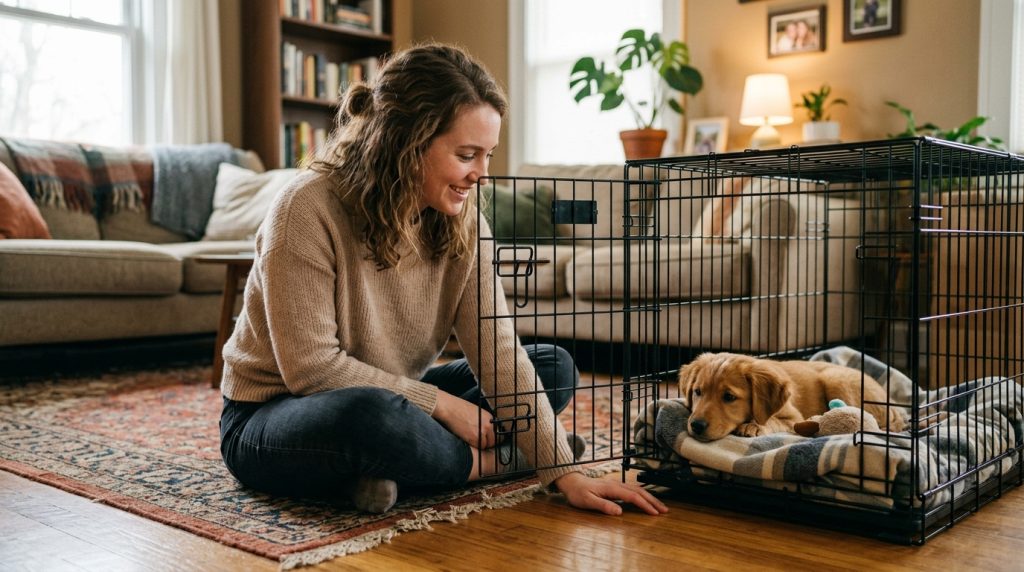
Even with all the right preparation, your puppy may still cry at night — especially in the first week. Here’s how to handle it:
First — figure out WHY they’re crying.
The “5-Minute Rule”
If you’re sure your puppy doesn’t need to potty, wait 5 minutes before responding to crying. Many puppies settle on their own within a few minutes. If they’re still crying after 5 minutes, you can briefly check on them — but keep it calm and boring. No picking up. No playing. Just a calm “it’s okay” and walk away.
Comfort Hacks That Actually Work:
This is the part nobody tells you.
Week 1 is hard. Your puppy may cry a lot. You may not sleep well. You may question every decision you’ve ever made.
Week 2 gets better. Your puppy starts to understand the routine. The crying shortens.
Week 3–4 — most puppies are sleeping through the night.
The key is consistency. Every time you break the rules, you restart the clock. If you let your puppy out of the crate because they cried, you taught them that crying works — and tomorrow night will be worse.
Stay consistent. It pays off.

This is important. Never leave a puppy in a crate longer than they can physically hold their bladder. Here’s a general guide:
| Puppy Age | Max Crate Time (Daytime) | Nighttime |
|---|---|---|
| 8–10 weeks | 1 hour | 3–4 hours |
| 10–12 weeks | 2 hours | 4–5 hours |
| 3–4 months | 3 hours | 5–6 hours |
| 4–6 months | 4 hours | Can often sleep through |
| 6+ months | 4–5 hours | Through the night |
Leaving a puppy longer than they can handle is not only unfair — it will destroy your crate training progress completely.
Here are a few things that many dog owners swear by:
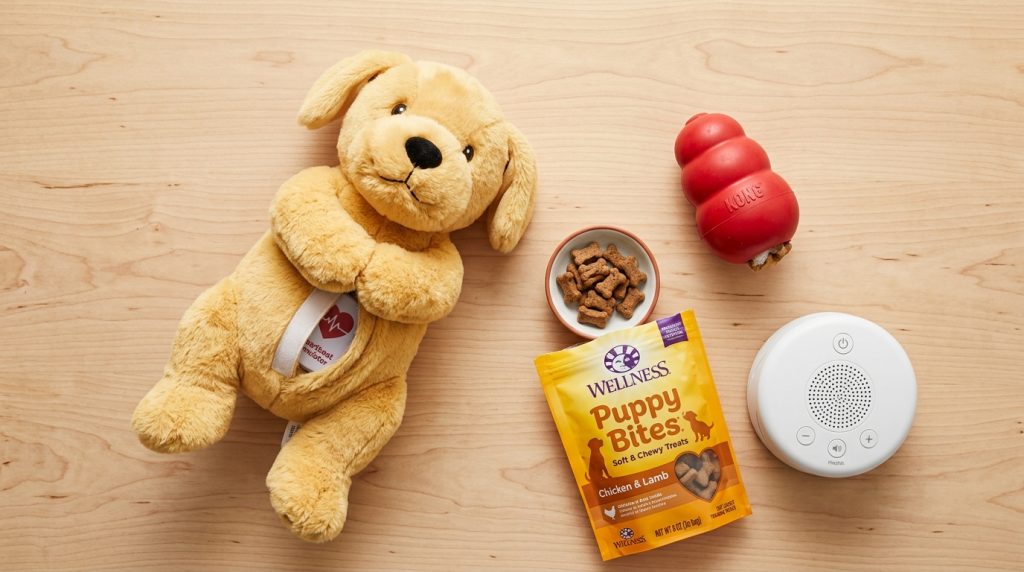
1. Snuggle Puppy Behavioral Aid A stuffed toy with a real-feel heartbeat and warming pack. Many puppies calm down almost instantly with this.
2. KONG Classic Stuffed with Peanut Butter Freeze it overnight and give it to your puppy when you put them in the crate. It keeps them busy and happy for 20–30 minutes.
3. Adaptil Dog Calming Diffuser Releases calming dog-appeasing pheromones. Works especially well in the first 2 weeks.
4. White Noise Machine Helps drown out strange nighttime sounds that startle puppies awake.
Most crying is normal. But sometimes, crying can be a sign of something else. Contact your vet if:
Your puppy is not trying to ruin your sleep. They are not being “bad.” They are a tiny, confused baby who just left everything familiar behind — their mom, their siblings, their home.
They need time to adjust. They need you to be patient, consistent, and kind.
The nights will get easier. The crying will stop. And one day soon, you’ll look at your dog sleeping peacefully in their crate — their safe little den — and you’ll know it was all worth it.
You’ve got this. 🐾
Have questions about your puppy’s crate training? Drop them in the comments below — I’d love to help! 👇