Physical Address
304 North Cardinal St.
Dorchester Center, MA 02124
Physical Address
304 North Cardinal St.
Dorchester Center, MA 02124

Your dog scratches. Then scratches again. Then bites at their leg, rubs their face on the carpet, and licks their paw for the tenth time today.
You watch helplessly, wondering — what is going on?
Itchy skin is one of the most common problems dog owners deal with. But here’s what makes it so frustrating: itchy skin isn’t just “one problem.” It’s actually a symptom — and behind that symptom could be any one of a dozen different causes.
Some causes are simple and easy to fix at home. Others need a vet’s attention before they turn into something serious.
In this complete guide, you’ll learn:
Let’s get your dog comfortable, happy, and itch-free. 🐾

Bella was a 4-year-old Shih Tzu who used to love playtime. But slowly, something changed. She started scratching constantly — her neck, her belly, her ears. She’d wake up in the middle of the night just to scratch.
Her owner, James, checked her for fleas. Nothing. He changed her shampoo. No improvement. He tried a different food. Still scratching.
After weeks of frustration, James finally took Bella to the vet. The diagnosis? A combination of a dust mite allergy and a secondary yeast infection — two problems working together, making each other worse.
Within three weeks of proper treatment, Bella was back to her playful self.
Bella’s story isn’t unusual. Itchy skin in dogs is almost never just “one simple thing.” But once you understand what’s really happening — you can fix it.
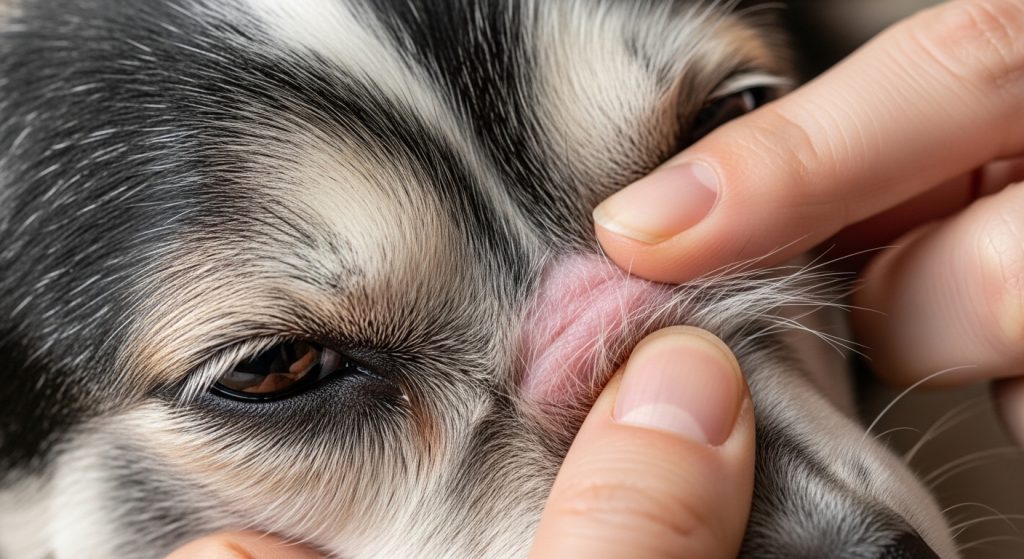
The medical term for itchy skin is pruritus. It happens when nerve endings in the skin get triggered by allergens, infections, parasites, dryness, or even emotions.
When a dog scratches, licks, bites, or rubs a certain area repeatedly, their body is sending one clear message:
“Something is wrong here. Please help.”
The challenge is figuring out what that something is.
🧩 The Main Causes of Itchy Skin in Dogs
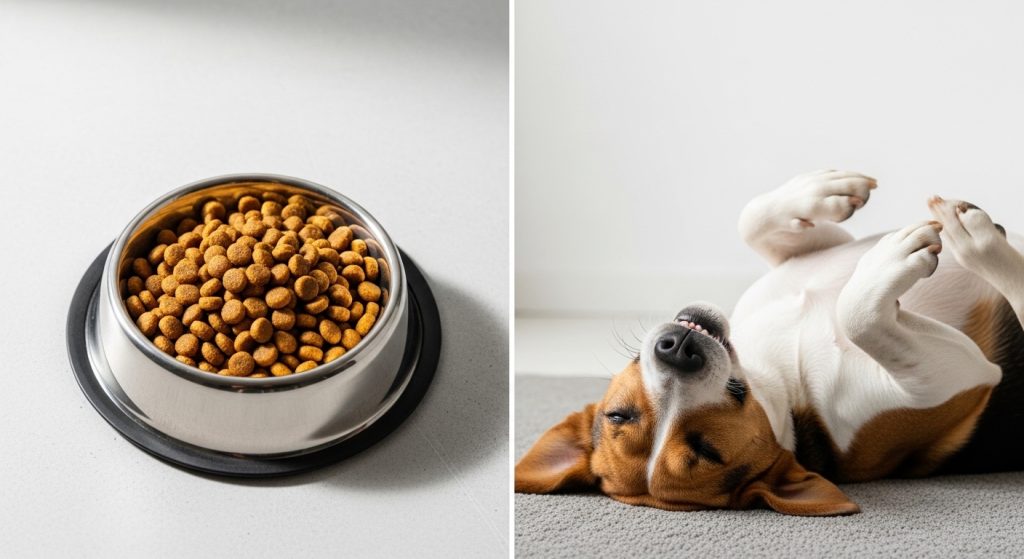
Allergies are by far the most common reason dogs develop itchy skin. And unlike what many people think, allergies in dogs don’t usually cause sneezing — they show up on the skin.
There are three main types of allergies that cause skin itching:
A dog can develop an allergy to a food ingredient at any age — even after eating the same food for years without any problem. The immune system suddenly decides to treat a normal ingredient as a threat.
Most common food allergens for dogs:
Where does the itching show up? Mostly on the face, ears, paws, groin, and around the base of the tail.
Other signs of food allergy:
What to do: Start a strict elimination diet using a protein your dog has never eaten before — rabbit, duck, kangaroo, or venison are good choices. Stick with it for 8 to 12 weeks. No treats, no table scraps, nothing else. If itching improves, you’ve found your answer.

This is called canine atopic dermatitis and it affects roughly 10–15% of all dogs. It happens when a dog’s immune system overreacts to things in the environment — things that are completely harmless to most dogs.
Common environmental triggers:
Key clue: If your dog’s itching gets worse during spring or fall, environmental allergy is very likely.
Common signs:
What to do:

This happens when something physically touches your dog’s skin and causes a reaction. It’s less common than food or environmental allergies but very real.
Common contact allergens:
How to identify it: The itching usually appears on the belly, paws, or chin — the parts of the body that touch surfaces most often.
What to do:
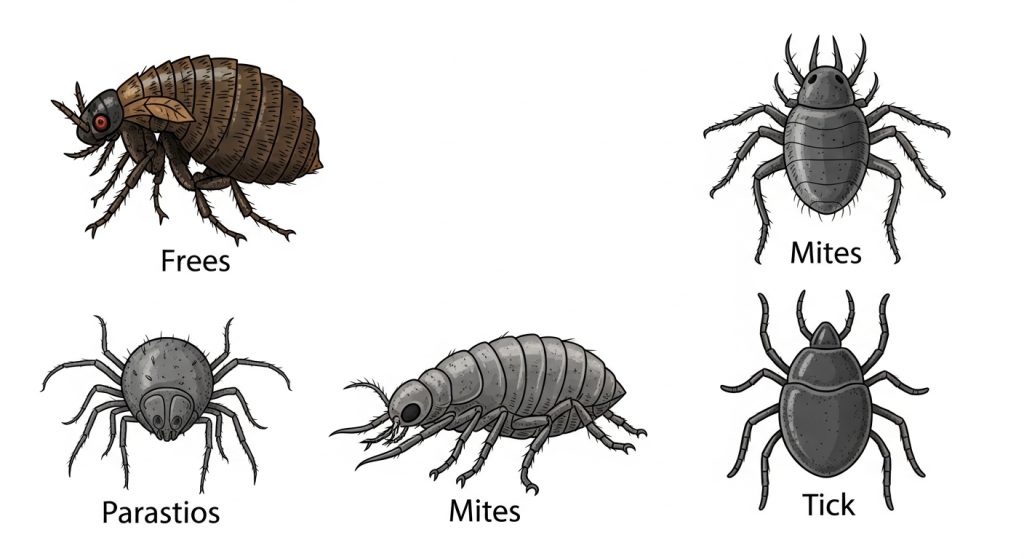
Yes, we’re talking parasites even though you may have already checked and found nothing. Here’s why — some parasites are nearly invisible to the naked eye.
Even one flea bite can cause intense itching in allergic dogs. A condition called Flea Allergy Dermatitis (FAD) means your dog isn’t just reacting to the flea — they’re having an allergic reaction to the flea’s saliva.
The flea itself might be long gone. But the itching continues.
Where to look: Base of the tail, inner thighs, belly, and lower back. Look for tiny black specks in the fur — that’s flea dirt (flea feces).
What to do: Use a vet-recommended flea treatment on your dog and treat your home — carpets, furniture, and bedding — at the same time.
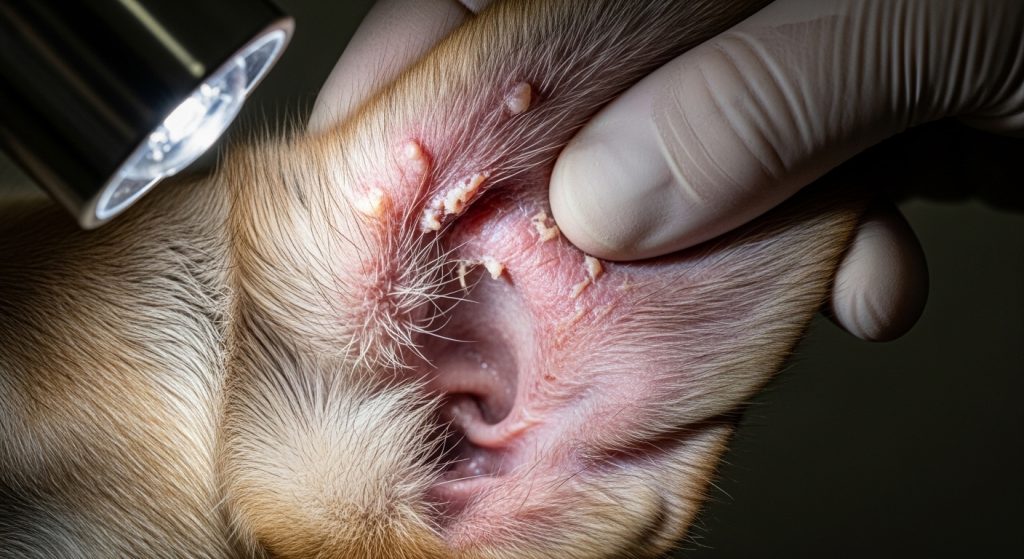
Mites are microscopic. You will never see them without a microscope. But they cause some of the most intense itching a dog can experience.
Two main types:
Sarcoptic Mange (Scabies)
Demodectic Mange
What to do: See your vet immediately. They will do a skin scraping test to confirm. Treatment is very effective once diagnosed.
Less common but worth checking. Ticks can cause localized irritation at the bite site. Lice (yes, dogs can get them) cause intense itching and can be seen as tiny moving specks near the skin.
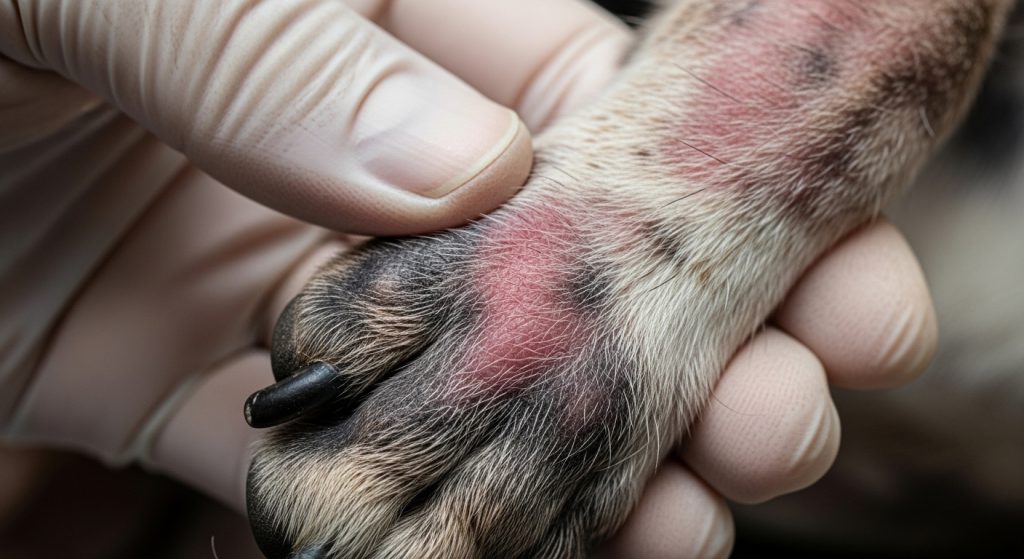
Skin infections are often secondary problems — meaning they start because something else (allergies, dry skin, a scrape) broke down the skin’s natural barrier, and then bacteria or yeast moved in.
But once an infection takes hold, it makes itching dramatically wor
What to do: Both types need veterinary treatment. Your vet may prescribe:
Don’t try to manage an infection at home for more than a few days — it will get worse without proper treatment.
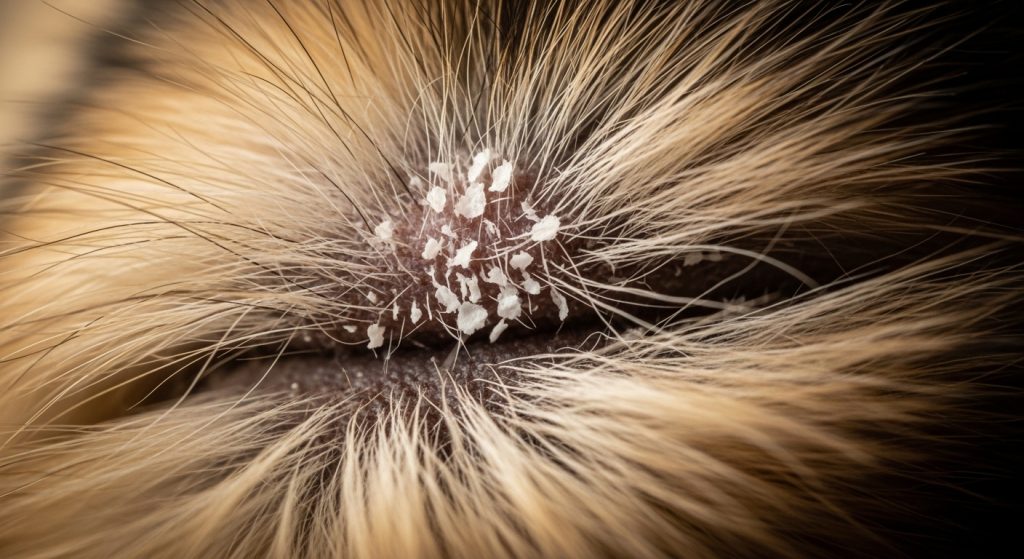
Dry skin might sound boring compared to infections and allergies — but it causes real, persistent discomfort for millions of dogs.
Common causes of dry skin in dogs:
Signs of dry skin:
What to do:

This is one that many owners never consider — but it’s more common than you’d think, especially in middle-aged and older dogs.
Two main hormonal conditions that cause skin issues:
What to do: Both conditions are diagnosed through blood tests at your vet. Once properly treated with medication, skin symptoms often improve significantly.

Dogs can develop a behavior called psychogenic scratching or licking — where they scratch or lick obsessively not because of a physical problem, but because of emotional distress.
Triggers include:
How to tell if it’s anxiety-driven:
What to do:

Some dogs itch more during specific seasons. This usually points to seasonal environmental allergies — but seasonal dry skin is also a factor in winter.
Spring/Summer: Pollen, grass, insect bites Fall: Mold spores, ragweed Winter: Dry indoor air, less bathing, thicker coats trapping moisture
Pattern recognition tip: Keep a simple diary — note when itching is worst and what the weather or season is. This information is very useful to your vet when trying to identify the cause.
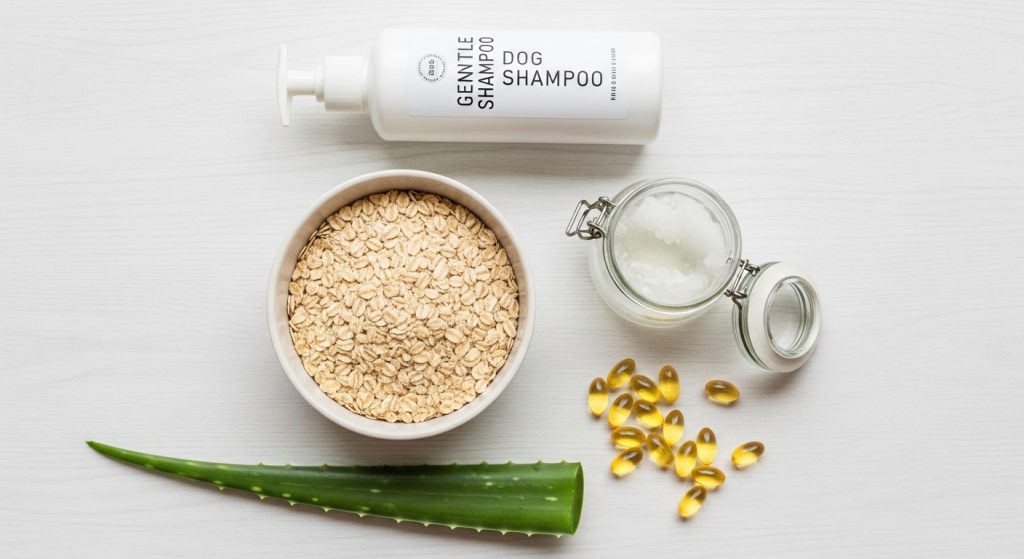
These remedies are safe, natural, and genuinely helpful for mild to moderate itching.
One of the most tried-and-true remedies for itchy dog skin. Oatmeal contains compounds called avenanthramides that actively reduce inflammation and soothe irritation.
How to do it:
Coconut oil has natural antibacterial and antifungal properties, and it’s a fantastic moisturizer for dry, irritated skin.
How to use: Apply a small amount directly to itchy, dry patches and gently massage in. You can also add a small teaspoon to their food daily for skin benefits from the inside.
Note: Use virgin, unrefined coconut oil only.
ACV is antifungal and antibacterial. It can help relieve itching caused by yeast or mild infections.
How to use: Mix equal parts apple cider vinegar and water in a spray bottle. Spray directly on itchy areas.
⚠️ Important: Never use on broken skin, open wounds, or raw, bleeding areas. It will sting severely.
Omega-3 fatty acids found in fish oil reduce inflammation throughout the body — including in the skin. This is probably the single most effective supplement for chronic itchy skin.
How to use: Add fish oil capsules or liquid to your dog’s food daily. Dosage depends on your dog’s weight — check with your vet for the right amount.
Results take 4–8 weeks to show, but they are often dramatic.
Pure aloe vera is cooling, healing, and anti-inflammatory. Great for red, hot, irritated skin patches.
How to use: Apply pure aloe vera gel (no added alcohols, colors, or fragrances — check the label) directly to affected areas. Let it absorb naturally.
Both chamomile and green tea have powerful anti-inflammatory properties.
How to use: Brew several bags of chamomile or green tea in a large pot of water. Let it cool completely. Use it as a final rinse after bathing, or pour into a spray bottle and apply to itchy spots throughout the day.
Home remedies are great for mild itching. But there are clear signs that it’s time to stop trying to manage it at home and get proper veterinary help.
See your vet if:
Waiting too long makes infections worse, damages the skin barrier further, and makes treatment harder and more expensive.
Depending on the diagnosis, treatment options your vet might recommend include:
| Treatment | Used For |
|---|---|
| Apoquel (oclacitinib) | Fast-acting allergy itch relief |
| Cytopoint injection | Long-lasting allergy control (lasts 4–8 weeks) |
| Medicated shampoos | Infections, yeast, seborrhea |
| Antibiotics | Bacterial skin infections |
| Antifungals | Yeast infections |
| Steroids (short-term) | Severe allergic flare-ups |
| Immunotherapy shots | Long-term environmental allergy solution |
| Prescription diet | Food allergy diagnosis and management |
| Thyroid medication | Hypothyroidism |

Prevention is always better than treatment. Once you’ve found and fixed the cause, these habits will help keep your dog’s skin healthy long-term:

Itchy skin in dogs is one of the most common — and most fixable — problems you’ll face as a dog owner. Here’s your step-by-step plan:
Your dog relies on you completely. They can’t tell you where it hurts or what’s bothering them. But their skin is always communicating — and now you know how to listen.
A comfortable, itch-free dog is a happy dog. And a happy dog makes everything better. 🐾❤️
Has your dog dealt with itchy skin? What ended up being the cause? What worked for you?
Drop your experience in the comments below — your story could help another dog owner going through the same frustrating situation right now.
And if this guide helped you, share it with a dog-loving friend. Because every dog deserves to feel good in their own skin. 🐶