Physical Address
304 North Cardinal St.
Dorchester Center, MA 02124
Physical Address
304 North Cardinal St.
Dorchester Center, MA 02124


It starts with a small thing — your dog shaking their head a little more than usual. Then comes the scratching. Then you lean in close and notice a strange smell coming from their ear. Something is clearly wrong, but you are not sure what it is or how serious it could be.
Ear infections are one of the most common health problems in dogs — affecting nearly 20 percent of all dogs at some point in their life. Some breeds get them repeatedly, almost every few months. And the painful truth is, many owners catch it too late, by which point the infection has gone deeper and treatment becomes harder.
The good news? Ear infections in dogs are very treatable when caught early. With the right knowledge, you can spot the signs fast, understand what is causing the problem, treat it properly, and most importantly — stop it from coming back. This guide covers everything, from the first symptom to full recovery and long-term prevention.
Every summer without fail, James’s Cocker Spaniel would start scratching his ears within a week of swimming in the lake. James thought it was just water in the ear. Three years in a row, the same thing happened — and each time it turned into a full bacterial infection requiring antibiotics. His vet finally explained that his dog’s long, floppy ears were trapping moisture after every swim, creating a perfect environment for bacteria to grow. One simple post-swim ear dry routine changed everything.
A dog’s ear canal is shaped differently from a human’s. While our ear canal runs mostly horizontal, a dog’s ear canal has a sharp L-shaped bend — a long vertical section that drops down before turning horizontal toward the eardrum. This shape makes it incredibly easy for moisture, debris, and wax to get trapped deep inside.
Add to that the fact that many dogs have floppy ears that cover the canal opening, reducing air circulation — and you have the perfect environment for bacteria and yeast to grow. Here are the most common causes:
Every summer without fail, James’s Cocker Spaniel would start scratching his ears within a week of swimming in the lake. James thought it was just water in the ear. Three years in a row, the same thing happened — and each time it turned into a full bacterial infection requiring antibiotics. His vet finally explained that his dog’s long, floppy ears were trapping moisture after every swim, creating a perfect environment for bacteria to grow. One simple post-swim ear dry routine changed everything.
A dog’s ear canal is shaped differently from a human’s. While our ear canal runs mostly horizontal, a dog’s ear canal has a sharp L-shaped bend — a long vertical section that drops down before turning horizontal toward the eardrum. This shape makes it incredibly easy for moisture, debris, and wax to get trapped deep inside.
Add to that the fact that many dogs have floppy ears that cover the canal opening, reducing air circulation — and you have the perfect environment for bacteria and yeast to grow. Here are the most common causes:
Important anatomy fact: Because of the L-shaped ear canal, you should never try to clean deep into your dog’s ear with a cotton swab. You cannot see the bend, and pushing a swab in can compact debris against the eardrum and cause real damage.

While any dog can get an ear infection, certain breeds deal with them far more frequently due to their ear shape, coat type, or genetic predisposition to allergies.
If your dog is on this list, do not wait for an infection to happen. Start a weekly ear check and monthly gentle ear cleaning routine from puppyhood. Prevention in high-risk breeds is far cheaper and less stressful than repeated treatment.

Nina noticed her Labrador tilting his head to one side during walks and thought it was just a quirky habit. A week later, he started whimpering when she touched his left ear. By the time she got to the vet, the infection had progressed to the middle ear. Her vet told her the head tilting was the very first sign — and if she had acted then, a simple ear drop treatment would have cleared it up in days.
Dogs cannot tell you their ear hurts. But they show you — in ways that are easy to miss if you do not know what to look for. Here are the signs to watch for, from the mildest early warnings to the more serious red flags:
See a vet immediately if your dog is losing balance, walking in circles, showing sudden hearing loss, has blood or heavy discharge from the ear, or cries out when the ear is touched. These are signs of a deep or middle ear infection that needs urgent treatment.
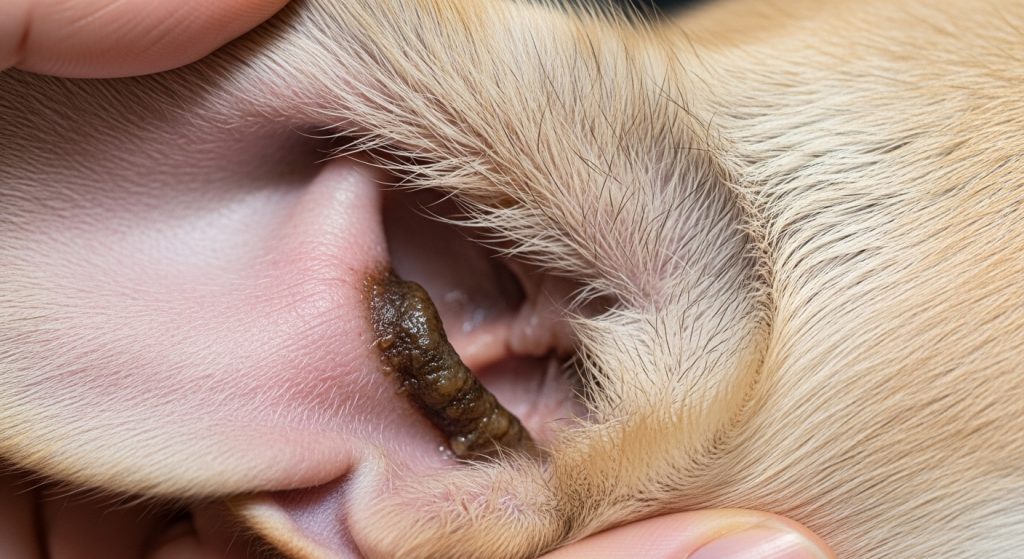
Not all ear infections are the same. Where the infection is located changes everything — the symptoms, the severity, the treatment needed, and the recovery time. There are three distinct types:
This is by far the most common type. The infection affects the outer ear canal — the part you can see and reach. Symptoms are the classic signs: scratching, shaking, smell, and discharge. When caught at this stage, treatment is straightforward and recovery is fast — usually 1 to 2 weeks with ear drops.
This occurs when an outer ear infection goes untreated and spreads past the eardrum into the middle ear. Symptoms become more serious — head tilting, facial nerve issues, and significant pain. Treatment requires oral antibiotics in addition to ear drops, and recovery can take 4 to 8 weeks.
The most serious type. The infection has reached the inner ear, affecting balance and potentially hearing. Dogs may walk in circles, fall over, have rapid eye movements, or show sudden hearing loss. This requires aggressive treatment, sometimes including surgery, and recovery can take months.
Every severe inner ear infection started as a simple outer ear infection that was not treated in time. This is why acting at the very first sign matters so much. An outer ear infection treated in week one costs a fraction of what an inner ear infection costs to treat in month two.

When Priya’s Shih Tzu kept getting recurring ear infections every 6 weeks, she kept buying the same over-the-counter ear drops and assumed she was doing everything right. It was only when her vet did a cytology test — examining the discharge under a microscope — that they discovered it was a yeast infection, not a bacterial one. The drops she had been using did nothing against yeast. One course of the correct antifungal drops, and the infections stopped coming back.
The most important thing your vet will do before prescribing any treatment is identify exactly what type of infection is present. This usually involves examining the ear with an otoscope and taking a small sample of the discharge to look at under a microscope — a process called cytology. This matters enormously because bacterial infections and yeast infections require completely different medications.
Your vet will prescribe antibiotic ear drops, most commonly containing Gentamicin, Enrofloxacin, or Polymyxin B. In more serious cases, oral antibiotics like Cephalexin or Amoxicillin-Clavulanate are added. Treatment duration is typically 7 to 14 days, sometimes longer for deep infections.
Antifungal ear drops containing Clotrimazole, Miconazole, or Ketoconazole are prescribed. These are completely different from antibiotic drops and will not work if used for a bacterial infection — which is exactly why a correct diagnosis first is so important.
Antiparasitic ear drops or topical spot-on treatments like Revolution (Selamectin) or Bravecto are used. All pets in the household must be treated simultaneously because mites spread easily between animals.
When infections keep coming back or are very advanced, your vet may recommend a deep ear flush under sedation to remove all the built-up debris and discharge from the canal. In extreme cases of chronic infections that have not responded to any treatment, a surgical procedure called Total Ear Canal Ablation (TECA) may be considered — though this is a last resort.

Home remedies will not cure a bacterial or yeast ear infection on their own — but they can support the healing process, reduce irritation, and help maintain ear health between vet visits. Use these alongside prescribed treatment, never instead of it.
Mix equal parts raw apple cider vinegar and clean water. Use a soft cotton ball — never a swab — to gently wipe the visible inside of the ear flap only. The mild acidity helps discourage yeast growth on the surface. Do not use this if the ear is red, raw, or has open sores — the acid will sting and cause more irritation.
Warm a small amount of virgin coconut oil between your fingers and gently apply it to the inside of the ear flap — the visible outer area only. Coconut oil has natural antifungal and antibacterial properties and soothes inflamed skin. Do not pour it into the ear canal.
If your dog is in pain and holding their head to one side, a warm (not hot) compress held gently against the outer ear for 5 minutes can reduce discomfort and inflammation. This does not treat the infection but provides real comfort while the medication works.
Alcohol-free witch hazel on a cotton ball can gently clean the outer visible part of the ear flap, removing surface discharge and reducing mild inflammation. Like all home remedies, this is for surface-level support only.
Never put hydrogen peroxide, rubbing alcohol, or undiluted essential oils into your dog’s ear. These are toxic to the sensitive tissues of the ear canal and can cause chemical burns, severe pain, and make the infection significantly worse.
The safest home approach is keeping the outer ear clean and dry, using vet-approved ear cleaning solution, and monitoring symptoms closely. If symptoms are not improving within 48 hours of starting vet-prescribed treatment, call your vet.

Regular ear cleaning is one of the most effective things you can do to prevent infections from developing in the first place. But it needs to be done correctly — the wrong technique can push debris deeper and cause more harm than good.
Here is a step-by-step guide your vet would approve of:
1
Gather your supplies. You need a vet-approved ear cleaning solution (like Epi-Otic, Virbac, or Zymox), clean cotton balls or gauze pads, and a treat to reward your dog afterward. Never use cotton swabs.
2
Get your dog comfortable. Have them sit or lie down. For anxious dogs, wrap them gently in a towel. Stay calm — if you are tense, your dog will be tense too.
3
Fill the ear canal with cleaning solution. Gently hold the ear flap upright and squeeze enough solution into the ear canal to fill it. You should see and hear the liquid go in.
4
Massage the base of the ear. Hold the ear flap up and use your fingers to massage the very base of the ear — where it meets the head — for about 20 to 30 seconds. You should hear a squelching sound as the solution loosens debris inside the canal.
5
Let your dog shake. Step back and let them shake their head. This brings loosened debris up and out of the canal naturally. This is the most important step — do not skip it.
6
Wipe the outer ear. Use a cotton ball to gently wipe the visible inside of the ear flap and the very entrance of the canal — only as far as your finger comfortably goes. Remove any debris that has come up.
7
Reward generously. Give your dog their treat and lots of praise. Making ear cleaning a positive experience from puppyhood means they will tolerate it calmly for life.
How often should you clean? For most dogs, once a month is enough. For dogs that swim regularly or breeds with floppy ears, once every 1 to 2 weeks. For dogs with chronic infections, your vet will give you a specific schedule. Over-cleaning strips natural protective oils from the ear and can actually increase infection risk.

For two years, Daniel’s German Shepherd had a recurring ear infection every 8 to 10 weeks. He treated each one diligently, but they kept coming back. His vet suggested a food allergy trial — switching to a hydrolyzed protein diet for 8 weeks. The ear infections stopped completely. The culprit turned out to be chicken — one of the most common food allergens in dogs. A simple diet change ended two years of suffering.
What your dog eats has a direct impact on how prone they are to ear infections, especially if allergies are involved. Food allergies are one of the most underdiagnosed causes of chronic recurring ear infections in dogs. The ear canal is often the very first place food allergy inflammation shows up.

Recovery time depends entirely on the type of infection, how early it was caught, and how consistently treatment is followed. Here is a realistic timeline:
If your dog is not showing improvement within 5 days of starting vet-prescribed treatment, go back to the vet. This may mean the wrong type of infection was identified, or that a resistant strain of bacteria is involved and a different antibiotic is needed.

If your dog has had one ear infection, the risk of getting another is real. The same conditions that caused the first one are often still there. But with a consistent prevention routine, most dogs can go months or even years without another infection.
The single most effective thing you can do after your dog swims is dry their ears immediately. Carry a small soft towel when you visit the beach, lake, or dog park. Thirty seconds of ear drying can prevent three weeks of ear infection treatment.

Can a dog ear infection go away on its own?
Very rarely and only in extremely mild early cases. In almost all situations, a dog ear infection requires treatment. Left untreated, infections progress from the outer ear to the middle and inner ear, becoming far more serious, painful, and expensive to treat over time.
Are dog ear infections contagious to humans?
Bacterial and yeast ear infections are not contagious to humans. However, ear mites can occasionally transfer to humans and cause temporary skin irritation, though they cannot complete their life cycle in humans. If ear mites are diagnosed, basic hygiene like washing hands after handling your dog is sufficient protection.
Can I use human ear drops on my dog?
No. Human ear drops contain ingredients that are often toxic or harmful to dogs and are not formulated for the specific bacteria and yeast strains found in dog ears. Always use products specifically prescribed or recommended by your vet for your dog’s specific infection type.
Why does my dog keep getting ear infections?
Recurring ear infections are almost always caused by an underlying condition that has not been addressed. The most common culprits are food allergies, environmental allergies, hypothyroidism, or anatomical factors like very narrow ear canals or excessive ear hair. Ask your vet about allergy testing and a long-term management plan rather than just treating each infection individually.
Is it safe to clean my dog’s ears every day?
No. Over-cleaning strips natural protective oils from the ear canal and disrupts the healthy balance of microorganisms that normally prevent infection. Unless your vet has given specific instructions for daily cleaning during an active infection, stick to once or twice a month for maintenance.
Can a dog ear infection cause hearing loss?
A deep or untreated middle or inner ear infection can cause temporary or in severe cases permanent hearing loss. This is one of the most serious complications of chronic ear disease in dogs. Outer ear infections caught early do not typically affect hearing at all.