Physical Address
304 North Cardinal St.
Dorchester Center, MA 02124
Physical Address
304 North Cardinal St.
Dorchester Center, MA 02124

You were petting your dog like any other evening — and then you felt it. A patch. Smooth skin where thick fur used to be.
You looked closer. Another spot. Then another.
Your dog isn’t scratching more than usual. He isn’t acting sick. But the fur is clearly disappearing — and you have no idea why.
This is one of the most alarming things a dog owner can discover. And the fear that hits you in that moment — “Is something seriously wrong with my dog?” — is completely understandable.
Here’s what you need to know: alopecia in dogs is more common than you think, it has many causes, and most of them are very treatable. But the key is catching it early and understanding what you’re dealing with.
This guide gives you everything — from causes to cures.

Alopecia simply means hair loss. In dogs, it refers to partial or complete loss of fur — in one spot, in multiple patches, or sometimes across the entire body.
It’s not a disease on its own. It’s a symptom — a signal that something else is going on inside or on your dog’s body.
Think of it like a warning light on your car dashboard. The light isn’t the problem — it’s telling you there’s a problem somewhere else. Alopecia is your dog’s skin and coat telling you: “Something isn’t right. Please pay attention.”
Alopecia can look different depending on the cause:
The pattern and location of hair loss is actually one of the most important clues your vet will use to figure out what’s causing it.

More common than most people realize.
Hair loss is one of the top reasons dog owners visit the vet. It affects all breeds, all ages, and both male and female dogs — though certain breeds and certain types of alopecia do show strong patterns.
Some dogs are born with alopecia-related conditions. Others develop it as puppies. Many develop it in middle age when hormonal changes or allergies emerge. And senior dogs commonly experience thinning coats as part of aging.
You are not alone in facing this — and you haven’t necessarily done anything wrong. Many causes of alopecia are genetic, hormonal, or environmental.
This is where the story gets detailed — because the cause of your dog’s hair loss completely determines the treatment. Getting the wrong treatment for the wrong cause doesn’t just waste time and money — it can make things worse.
Let’s go through each cause carefully.
Allergies are the leading cause of alopecia in dogs. When a dog has an allergic reaction — to food, environment, or something that touches their skin — their body responds with intense itching. The dog scratches, bites, and licks the itchy area constantly. Over time, that constant irritation destroys the hair follicles in that area.
The hair loss from allergies isn’t caused directly by the allergy — it’s caused by the dog’s response to the allergy.
Three main types of allergies that cause hair loss:
🍗 Food Allergies The immune system overreacts to a protein in food — most commonly chicken, beef, dairy, wheat, or eggs. Symptoms often include:
🌿 Environmental Allergies (Atopic Dermatitis) Reaction to pollen, dust mites, mold, or grass. Symptoms include:
🧴 Contact Allergies Reaction to something that directly touches the skin — certain shampoos, cleaning products, fabrics, or plants. Hair loss appears exactly where the contact occurred.
What to do:

“Mange” is a word that frightens most dog owners — and understandably so. But not all mange is the same, and knowing the difference matters.
Sarcoptic Mange (Canine Scabies)
Caused by a tiny mite called Sarcoptes scabiei that burrows into the skin. This type is:
Demodectic Mange (Red Mange)
Caused by Demodex mites — tiny mites that actually live naturally in every dog’s hair follicles in small numbers. The problem occurs when the immune system can’t control their population.
What to do:

Ringworm has nothing to do with worms. It’s a fungal infection (dermatophytosis) that attacks the hair shaft itself, causing the fur to break off at the surface and leaving circular or irregular bald patches.
Key characteristics:
What to do:

When hair loss appears in a symmetrical pattern — the same area on both sides of the body, without itching — hormonal imbalance immediately becomes the top suspect.
Hormones regulate hair growth cycles. When they’re out of balance, the entire hair growth process can slow down, stop, or go into reverse.
The main hormonal conditions causing alopecia:
🔵 Hypothyroidism (Underactive Thyroid)
The thyroid gland doesn’t produce enough thyroid hormone, slowing down nearly every process in the body — including hair growth.
Signs:
Most common in: Golden Retrievers, Dobermans, Boxers, Irish Setters, Cocker Spaniels (middle-aged, medium to large breeds)
Treatment: Daily oral thyroid hormone replacement (levothyroxine) — this is a lifelong medication, but response is usually excellent. Most dogs show significant improvement within 2–3 months.
🔴 Cushing’s Disease (Hyperadrenocorticism)
The body produces too much cortisol — either from a tumor on the adrenal gland or from a tumor on the pituitary gland.
Signs:
Most common in: Poodles, Dachshunds, Boxers, Boston Terriers (middle-aged to older dogs)
Treatment: Medication (trilostane or mitotane) to reduce cortisol production, or surgery to remove a tumor. Requires regular monitoring.
🟣 Sex Hormone Imbalances
Unneutered males and unspayed females can develop hair loss related to reproductive hormones. Conditions include:
Treatment: Spaying or neutering often resolves the issue. Hormone therapy in some cases.

Some dogs are born with a genetic tendency toward hair loss. This isn’t caused by anything you’re doing wrong — it’s written into their DNA.
Pattern Baldness (Canine Pattern Alopecia) Similar to male pattern baldness in humans. Hair gradually thins and disappears from specific areas — typically the ears, temples, chest, belly, or thighs.
Most affected breeds:
This type is usually cosmetic and doesn’t require treatment — though some owners use supportive supplements.
Color Dilution Alopecia (CDA) Affects dogs with dilute coat colors — blue, fawn, or lilac coats. The dilute pigment gene causes hair shaft defects that lead to progressive hair loss and recurring skin infections.
Most affected breeds: Blue Dobermans, blue/fawn French Bulldogs, blue Great Danes, blue Chihuahuas
Signs: Hair loss and scaling beginning from 6 months to 3 years of age, mainly on the blue or fawn portions of the coat
Treatment: No cure, but management includes regular medicated baths, moisturizing conditioners, omega-3 supplements, and treating secondary infections.
Black Hair Follicular Dysplasia Only the black hairs are affected — they become dull, brittle, and fall out. Tan, white, or other colored hairs remain normal.

Post-Injection Alopecia After a vaccine or injection, some dogs develop a patch of permanent or long-lasting hair loss at the injection site. This is an immune-mediated reaction — the body attacks the hair follicles in response to the injection.
Post-Clipping Alopecia After being shaved or clipped (for surgery or grooming), some dogs — particularly Nordic and double-coated breeds — fail to regrow their fur normally. Months pass. The coat stays patchy, thin, or missing entirely.
Most affected breeds: Siberian Huskies, Alaskan Malamutes, Samoyeds, Pomeranians, Chow Chows
Why it happens: Not fully understood, but linked to damage to the undercoat cycle and possibly hormonal triggers
The lesson: Never shave a double-coated dog unless medically necessary. Their double coat is designed to both keep them warm in winter and cool in summer — shaving it doesn’t help them and risks permanent coat damage.

Just like humans can lose hair during periods of intense stress, dogs can too. Chronic stress, major life changes, or anxiety disorders can disrupt the normal hair growth cycle.
Common stress triggers in dogs:
Signs this may be the cause:
What to do:

Flea Allergy Dermatitis (FAD) is one of the most common skin conditions in dogs worldwide. Here’s the thing — the flea itself doesn’t directly cause hair loss. The dog’s allergic reaction to flea saliva does.
A single flea bite can trigger an immune response so intense that the dog scratches and bites themselves raw. And you might never even see the flea — they jump on, feed, and jump off in seconds.
Signs:
What to do:

Because so many different things can cause hair loss, diagnosis requires detective work. Here’s what to expect at a veterinary appointment:
The History Your vet will ask detailed questions:
Your answers are genuinely crucial — don’t skip or guess.
Physical Examination The vet will examine the pattern and location of hair loss, check skin condition, look for parasites, assess lymph nodes, and evaluate overall body condition.
Diagnostic Tests
Depending on what the examination reveals, your vet may recommend:

There is no single “alopecia treatment” — because alopecia has dozens of different causes. What works brilliantly for one cause will do nothing for another.
Here’s a summary of treatment by cause:
| Cause | Primary Treatment |
|---|---|
| Food allergy | Elimination diet → novel protein food |
| Environmental allergy | Apoquel / Cytopoint / immunotherapy |
| Sarcoptic mange | Anti-parasitic medication (Revolution, Bravecto) |
| Demodectic mange | Anti-parasitic + immune support |
| Ringworm | Antifungal shampoo + oral antifungal |
| Hypothyroidism | Daily levothyroxine (lifelong) |
| Cushing’s disease | Trilostane or mitotane medication |
| Hormonal (sex hormones) | Spay/neuter or hormone therapy |
| Flea allergy | Year-round flea prevention + antihistamines |
| Genetic/pattern baldness | Supportive care, supplements |
| Stress-related | Anxiety management + omega-3s |
| Post-clipping | Time + coat care, usually no treatment |
While your vet identifies and treats the underlying cause, there are several things you can do at home to support your dog’s skin and coat health:
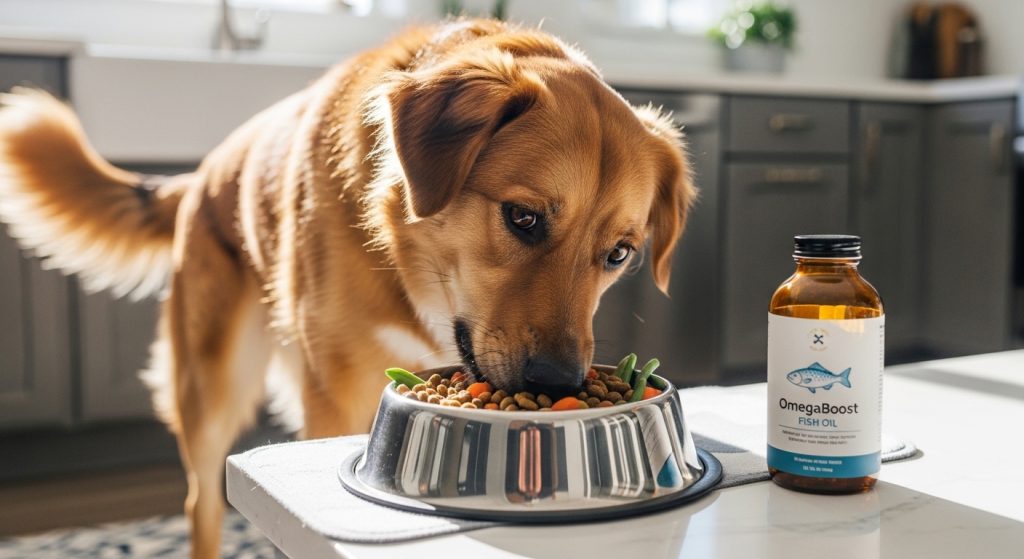
🐟 Omega-3 Fatty Acids (Fish Oil) One of the most evidence-backed supplements for skin and coat health. Reduces inflammation, supports the skin barrier, and improves coat quality. Use a high-quality fish oil designed for dogs and dose by weight.
🛁 Gentle, Appropriate Bathing Over-bathing strips natural skin oils and worsens many conditions. Under-bathing allows buildup of allergens and bacteria. Ask your vet how often to bathe given your dog’s specific condition — and always use a dog-specific, pH-balanced shampoo.
🥗 High-Quality Diet Skin and coat condition directly reflects nutritional status. A diet rich in high-quality protein, omega fatty acids, zinc, and biotin supports healthy hair growth. Look for foods with named protein sources (chicken, salmon, lamb) as the first ingredient.
🌿 Supplements That May Help
Always check with your vet before starting supplements — especially if your dog is on medication, as some interactions exist.
🏠 Environmental Management
While any dog can develop hair loss, these breeds have a statistically higher risk:
High Risk for Hormonal Alopecia:
High Risk for Allergic Alopecia:
High Risk for Genetic Alopecia:
If you have one of these breeds, being proactive about skin and coat checks — and knowing what to watch for — can make a significant difference in early diagnosis.

This depends entirely on the cause.
Fully treatable and reversible:
Manageable but not fully curable:
Permanent or cosmetic:
The earlier you seek diagnosis and treatment, the better the chances of full hair regrowth.
Hair loss is your dog’s body sending you a signal. The longer an underlying condition goes untreated, the more damage it can cause — to the hair follicles, to the skin, and sometimes to overall health.
See your vet promptly if:
See your vet urgently if:

For some dogs, alopecia is a one-time problem that resolves with treatment. For others — especially those with genetic conditions, chronic allergies, or hormonal diseases — it’s something you manage together over your dog’s entire life.
Managing chronic alopecia means:
A dog with chronic alopecia can live a completely happy, comfortable, excellent quality life with good management. Many do.
Let’s talk about something that doesn’t get mentioned in most dog health articles.
When your dog starts losing fur, it affects you emotionally. That gorgeous coat was part of how you pictured your dog. Watching it disappear is genuinely distressing. Some owners feel guilt — wondering if they caused it. Others feel fear — imagining the worst.
Both are completely normal.
What helps: getting answers. Uncertainty is always harder than difficult truths. Once you have a diagnosis and a treatment plan, most owners feel an enormous sense of relief — even if the road ahead involves ongoing management.
Your dog doesn’t care about their bald patches. They care about walks, food, your attention, and being loved. Those things are still perfectly intact.

The moment you noticed your dog’s fur was missing, you started paying attention. That instinct — that quiet alarm that said “something isn’t right” — is exactly what your dog needed from you.
Alopecia in dogs is common. It’s often confusing. It can be frustrating when treatment takes time and patience. But it is almost always manageable — and in many cases, completely reversible.
Your dog can’t tell you where it hurts or what’s wrong. But their skin and coat speak for them, if you know how to listen.
You’re listening. That’s what matters.
Now go make that vet appointment — and start getting answers.
💬 Is your dog dealing with hair loss right now? Share in the comments — what breed, where the hair loss is appearing, and what your vet has found so far. Your experience could help another dog owner who’s just starting this journey.
🔖 Tags: alopecia in dogs, dog hair loss causes, dog losing fur patches, canine alopecia treatment, dog bald patches, mange in dogs, dog hypothyroidism hair loss, Cushing’s disease dogs, dog skin problems
📂 Category: Dog Health & Skin Conditions
🔗 Internal Link Suggestions: “Cushing’s Disease in Dogs: Complete Guide” | “Best Dog Foods for Skin Allergies” | “Mange in Dogs: Types, Symptoms and Treatment”