Physical Address
304 North Cardinal St.
Dorchester Center, MA 02124
Physical Address
304 North Cardinal St.
Dorchester Center, MA 02124

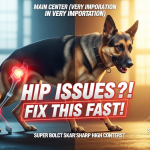
Your dog used to sprint to the door every time you grabbed the leash. Now, he just looks at you — tail wagging slowly, but body not moving. Something is wrong. And if you’ve noticed your dog struggling to stand up, limping after a walk, or avoiding the stairs he used to fly up, there’s a good chance his hips are hurting him.
Hip problems in dogs are more common than most owners realize. From young large-breed puppies to senior golden retrievers, hip pain can silently steal your dog’s quality of life — often before you even notice the signs.
The good news? You can help. Whether it’s early detection, the right diet, proper exercise, or medical treatment — there are real, proven solutions that can give your dog his life back.
This guide will walk you through everything: the causes, the warning signs, the treatments, and the things you can do at home starting today.

When we talk about “hip problems” in dogs, we’re usually talking about one of a few specific conditions. The most common is Hip Dysplasia — a condition where the hip joint doesn’t develop properly, causing the ball and socket to grind against each other instead of moving smoothly.
Think of it like a door hinge that doesn’t quite fit right. Over time, that grinding causes pain, inflammation, and eventually arthritis.
But hip dysplasia isn’t the only culprit. Dogs can also suffer from:
Each of these conditions has its own story, but they all end the same way: a dog in pain, trying his best to hide it.
Dogs don’t get hip problems by accident. There are real, identifiable reasons — and knowing them can help you prevent problems before they start.
Some breeds are simply born with a higher risk of hip problems. Large and giant breeds are the most vulnerable because their rapid growth puts enormous stress on developing joints.
High-risk breeds include:
If you have one of these breeds, regular hip screening isn’t optional — it’s essential.

Here’s something many new dog owners don’t know: overfeeding a large-breed puppy can actually increase their risk of hip dysplasia.
When puppies grow too fast because of excessive calories or the wrong calcium-to-phosphorus ratio, their bones and joints can develop unevenly. A large-breed puppy formula isn’t just marketing — it’s genuinely different in a way that protects your dog’s developing skeleton.
Key nutritional factors that affect hip health:
If there’s one thing you can change today that will make the biggest difference in your dog’s hip health — it’s their weight.
Every extra kilogram your dog carries puts approximately 3–5 times that weight as force on their hip joints with every step. A dog who is 5kg overweight is putting the equivalent of 15–25kg of extra stress on joints that may already be struggling.
Obesity doesn’t just make hip problems worse. It can cause hip problems in dogs that would otherwise have been fine.
Exercise is tricky. Too little leads to weak muscles that can’t support the hip joint. Too much — especially in puppies — stresses developing cartilage and bone.
The type of exercise matters too. Repetitive, high-impact activities like running on hard surfaces or jumping from heights can accelerate joint damage in at-risk dogs.
A bad fall, a car accident, or even a rough play session that goes wrong can cause hip injuries that develop into long-term problems. Sometimes the damage isn’t obvious right away — it quietly causes changes in the joint over months or years.
Dogs are masters at hiding pain. It’s an instinct that goes back to their wild ancestors — showing weakness could mean becoming prey. So by the time your dog shows obvious signs of hip pain, they’ve often been hurting for a while.
Here’s what to watch for:

If you suspect your dog has hip problems, your vet will typically:
1. Physical Examination The vet will manually move the hip joint, feeling for grinding (crepitus), reduced range of motion, or pain response. They’ll also watch your dog walk and assess muscle symmetry.
2. X-Rays (Radiographs) This is the gold standard. X-rays reveal the shape and fit of the hip joint, the presence of arthritis, bone spurs, and the degree of joint degeneration. In some cases, sedation is needed to get the positioning exactly right.
3. The Ortolani Test A specific physical test where the vet gently manipulates the hip to detect joint laxity — a key indicator of hip dysplasia in younger dogs.
4. Advanced Imaging (Less Common) In complex cases, CT scans or MRI may be recommended to get a clearer picture of soft tissue involvement.
5. PennHIP Method A specialized X-ray technique used for formal hip screening in breeding dogs, which measures joint laxity more accurately than standard X-rays.
Here’s where the good news really begins. Hip problems in dogs are manageable — often very successfully — with the right treatment plan.
Treatment depends on:
For many dogs — especially those with mild to moderate hip dysplasia or arthritis — non-surgical management works remarkably well.
Weight Management This is always the first step. If your dog is overweight, getting them to their ideal body condition score can reduce hip pain more significantly than almost any medication.
Controlled Exercise The goal is to build and maintain muscle without overloading the joint.
✅ Best exercises for dogs with hip problems:
❌ Exercises to avoid:

Medications
Your vet may prescribe:
Joint Supplements
The evidence is mixed, but many vets and dog owners report meaningful benefits from:
Always consult your vet before starting any supplement regimen. Dosing matters, and some supplements interact with medications.
Physical Therapy & Massage
Certified canine rehabilitation therapists (yes, they exist!) can design exercise and manual therapy programs that rival what human physiotherapists do. Techniques include:
Environmental Modifications
Small changes at home can make a big difference in daily comfort:

When conservative management isn’t enough — or in certain specific situations — surgery can be transformative.
1. Triple or Double Pelvic Osteotomy (TPO/DPO) Performed in young dogs (typically under 10 months) before arthritis has set in. The pelvis is cut and rotated to create better socket coverage over the femoral head. Results are excellent when done early.
2. Juvenile Pubic Symphysiodesis (JPS) A preventive surgery done in very young puppies (under 5 months) to alter pelvic development. Minimally invasive and highly effective when done at the right time.
3. Femoral Head and Neck Ostectomy (FHO) The femoral head (the “ball”) is removed entirely, and the body creates a “false joint” of scar tissue. Works surprisingly well, especially in smaller and medium-sized dogs. Less costly than total hip replacement.
4. Total Hip Replacement (THR) Exactly what it sounds like — the entire hip joint is replaced with an artificial implant. This is the gold standard surgical option. Outcomes are excellent, with most dogs returning to near-normal activity. It is expensive (costs vary significantly by location and specialist) but offers the best long-term result for severe cases.
If your dog is young, or if you’re planning to get a puppy, prevention is far more powerful than treatment.
For Puppies:
For Adult Dogs:
For Senior Dogs:

Having a dog with hip problems doesn’t mean your life together is over. Millions of dogs with hip dysplasia and arthritis live happy, comfortable, fulfilling lives — because their owners took the time to understand what they needed.
Here’s what a good daily routine can look like:
Morning:
Afternoon:
Evening:
Weekly:
One of the biggest mistakes dog owners make is waiting too long to get professional help. Early diagnosis and management genuinely leads to better outcomes — both in terms of quality of life and in slowing the progression of the disease.
See your vet soon if:
See your vet urgently if:

Hip problems in dogs are painful, progressive, and — without intervention — life-limiting. But they are not a death sentence. They are a challenge you and your dog face together.
The dog who used to sprint to the leash might take longer to get up now. He might need a ramp instead of jumping. He might need shorter walks and warmer nights. But with the right care, the right treatment, and the right environment — he can still wag his tail hard, still want his walks, and still feel like himself.
You noticed something was wrong. That’s already the most important step.
Now you know what to do.
💬 Has your dog been diagnosed with hip dysplasia or arthritis? Drop a comment below — share what’s worked for you. Your experience might be exactly what another dog owner needs to read today.
🔖 Tags: hip dysplasia in dogs, dog hip problems, hip pain in dogs, dog arthritis treatment, canine hip dysplasia symptoms, hip problems large breed dogs, dog hip surgery, home remedies dog hip pain
📂 Category: Dog Health & Wellness
🔗 Internal Link Suggestions: “Best Orthopedic Dog Beds” | “Dog Weight Management Guide” | “Senior Dog Care Tips”