Physical Address
304 North Cardinal St.
Dorchester Center, MA 02124
Physical Address
304 North Cardinal St.
Dorchester Center, MA 02124

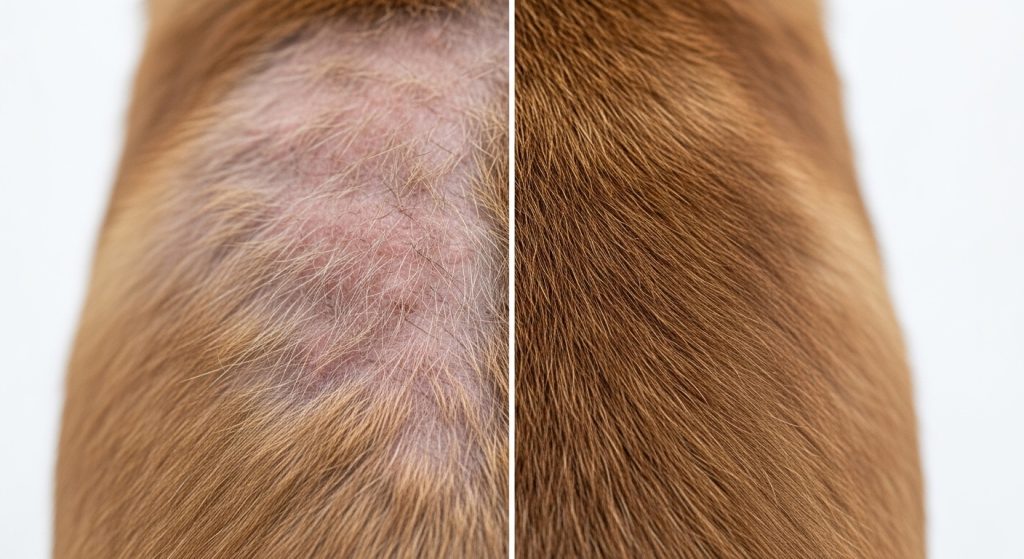
Have you ever noticed a bald patch on your dog’s back and thought, “It will grow back on its own”? Many dog owners say the same thing — until weeks pass and the patch only gets bigger.
Hair loss in dogs is not just a cosmetic issue. It is often a signal that something deeper is going on inside your dog’s body — an infection, a hormonal imbalance, allergies, or even stress. The scary part? Ignoring it too long can lead to permanent damage to the hair follicles.
The good news is — dog hair can absolutely grow back with the right treatment. Whether it is a vet-prescribed solution or a simple change at home, there are real, proven ways to help your dog’s coat recover. This guide covers everything you need to know, from causes to treatments, step by step.
Sarah noticed small bald spots on her Labrador, Max. She tried switching shampoos — nothing changed. Three weeks later, half of Max’s back was bare. A vet visit revealed it was a fungal infection called Ringworm. With the right antifungal treatment, Max’s coat fully recovered in just 8 weeks. The lesson? Knowing the cause is the first step to the cure.
Before jumping into treatments, you need to understand why your dog’s hair is falling out. The cause determines the cure. Here are the most common reasons:
Pro tip: Look at the shape and location of the bald patch. Round patches often mean fungal infection. Symmetrical thinning on both sides usually points to a hormonal issue. This small observation can save you time and money at the vet.
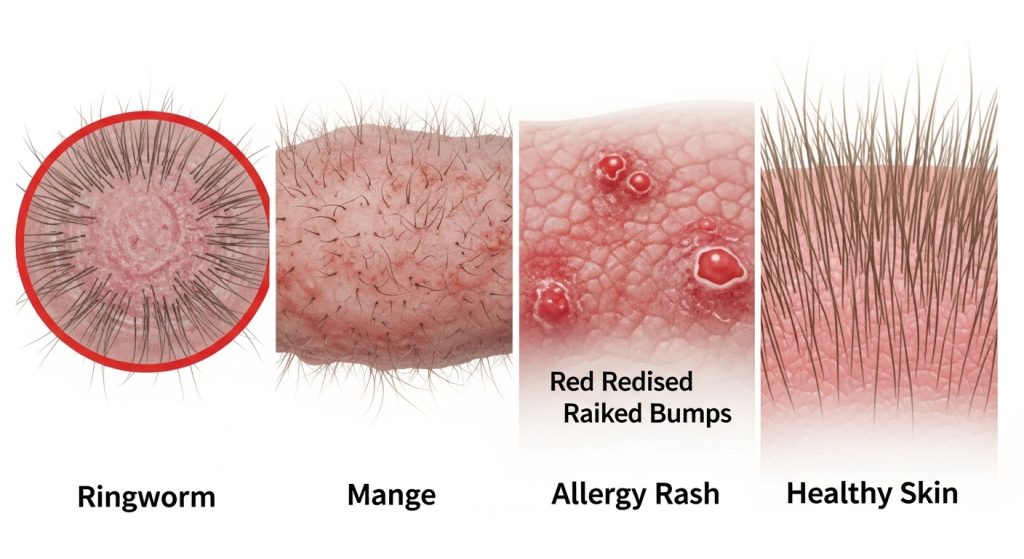
Not all hair loss is an emergency. Some shedding is completely normal. But certain signs mean you should see a vet as soon as possible.
See a vet immediately if you notice: large or spreading bald patches, red or inflamed skin, your dog scratching, biting, or rubbing constantly, bad smell from the skin, crusty or oozing sores, or hair loss paired with weight changes, lethargy, or excessive thirst.
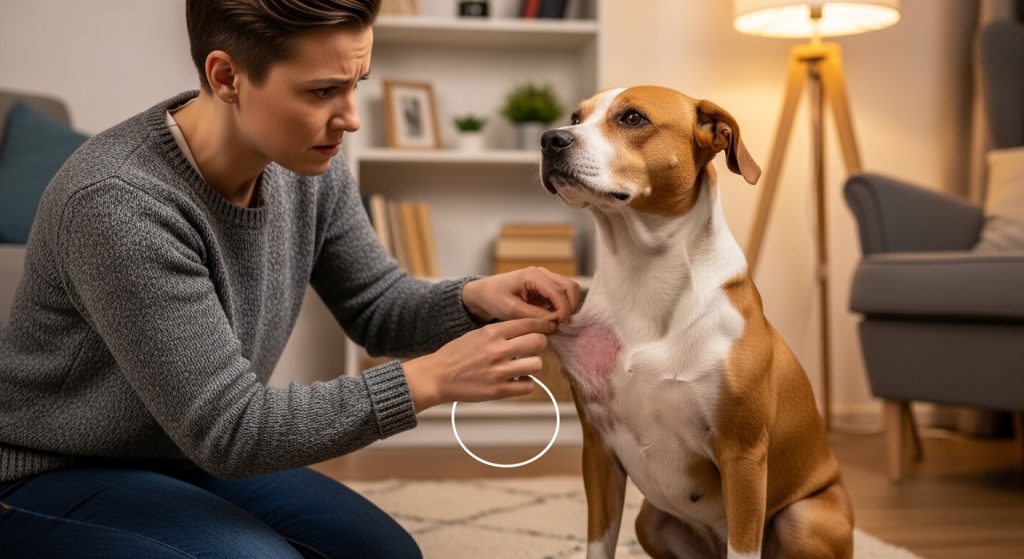
When Jake’s Beagle started losing fur around her neck, he assumed it was just dry skin. After 2 months of home remedies with no results, a vet diagnosed Hypothyroidism. Daily thyroid medication brought her coat back fully within 4 months. Some conditions simply need medical treatment — and that’s completely okay.
Here are the most effective vet-prescribed treatments, matched to their specific causes:
Your vet will prescribe antifungal shampoos like Miconazole or oral medications like Itraconazole. Treatment usually lasts 4 to 8 weeks. The bald patches begin filling in within 3 to 4 weeks of starting treatment.
Depending on the type of mange, your vet may use Ivermectin injections, Bravecto oral tablets, or medicated dips like Amitraz. Demodectic mange often clears up with boosting the immune system. Sarcoptic mange needs faster, more aggressive treatment.
If bloodwork confirms hypothyroidism or Cushing’s disease, daily oral medication (Levothyroxine or Trilostane) is prescribed. Hair regrowth usually starts within 6 to 8 weeks and can take up to 6 months to fully restore.
Pyoderma or secondary bacterial infections are treated with oral antibiotics like Cephalexin, combined with medicated shampoos. Most cases resolve in 3 to 6 weeks.
Allergy-related hair loss is managed through elimination diets, antihistamines, or in more serious cases, monthly allergy injections or Apoquel tablets. Identifying the trigger — food, grass, dust — is the most important step.
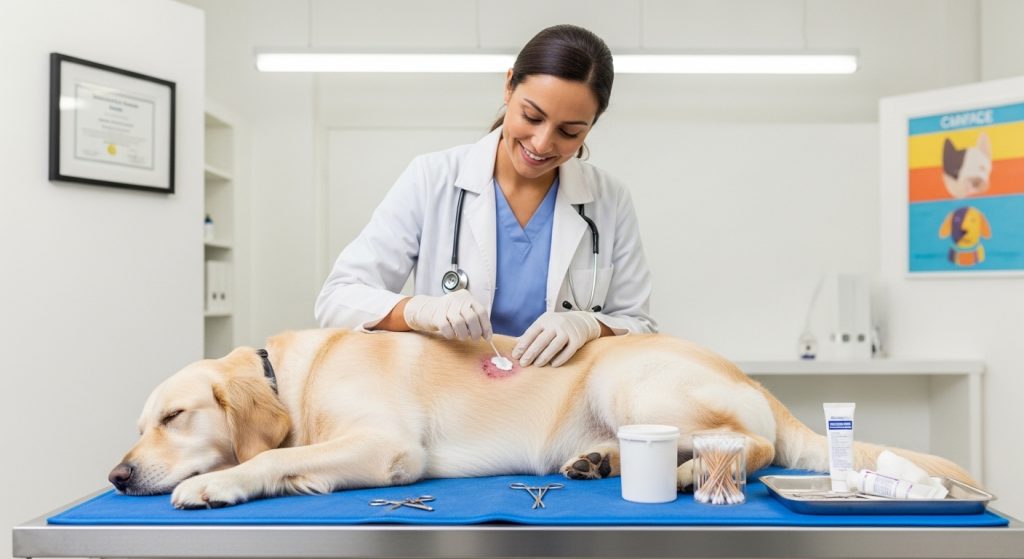
Home remedies will not cure a fungal infection or hormonal disease on their own. But they are powerful tools to support healing, improve coat health, and speed up regrowth — especially when used alongside vet treatment.
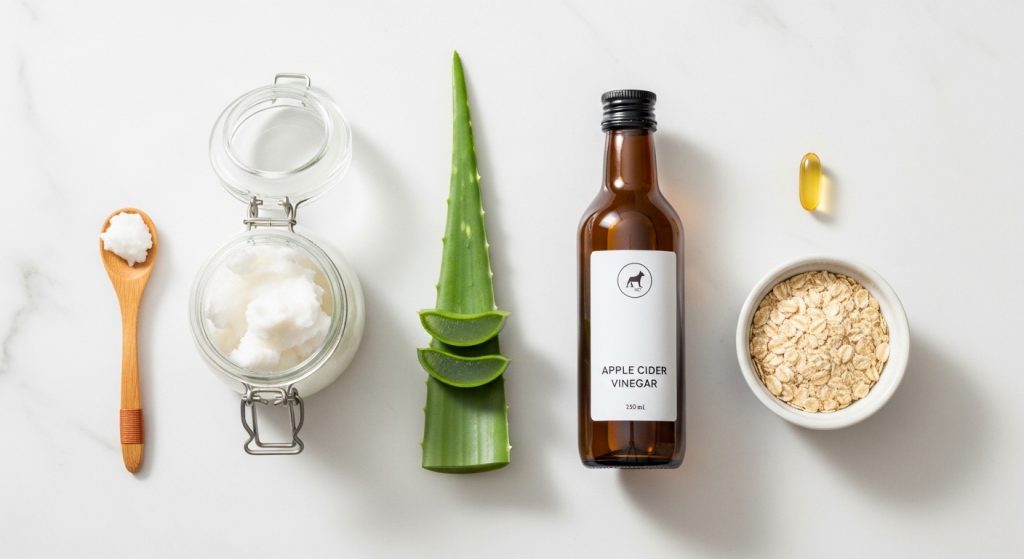
Coconut oil has natural antifungal and antibacterial properties. Warm a small amount between your palms and massage it gently into the affected area 2 to 3 times a week. It soothes irritated skin, reduces inflammation, and creates a healthy environment for new hair growth.
Fresh aloe vera gel (from the plant, not flavored store-bought versions) can be applied directly to inflamed or itchy patches. It cools the skin, reduces redness, and helps the skin recover faster. Apply a thin layer and leave it on — no rinsing needed.
Mix one part apple cider vinegar with three parts water. After bathing your dog, use this as a final rinse over the coat (avoiding the face and open wounds). It helps balance the skin’s pH and can reduce fungal growth on the surface.
Colloidal oatmeal baths are one of the most vet-recommended home treatments for itchy, irritated skin. Grind plain oats into a fine powder and dissolve it in warm bathwater. Let your dog soak for 10 minutes. Repeat once or twice a week.
Adding a fish oil capsule or flaxseed oil to your dog’s daily food makes a visible difference in coat quality within 4 to 6 weeks. Omega-3 fatty acids reduce inflammation from the inside and directly support healthy hair follicles.
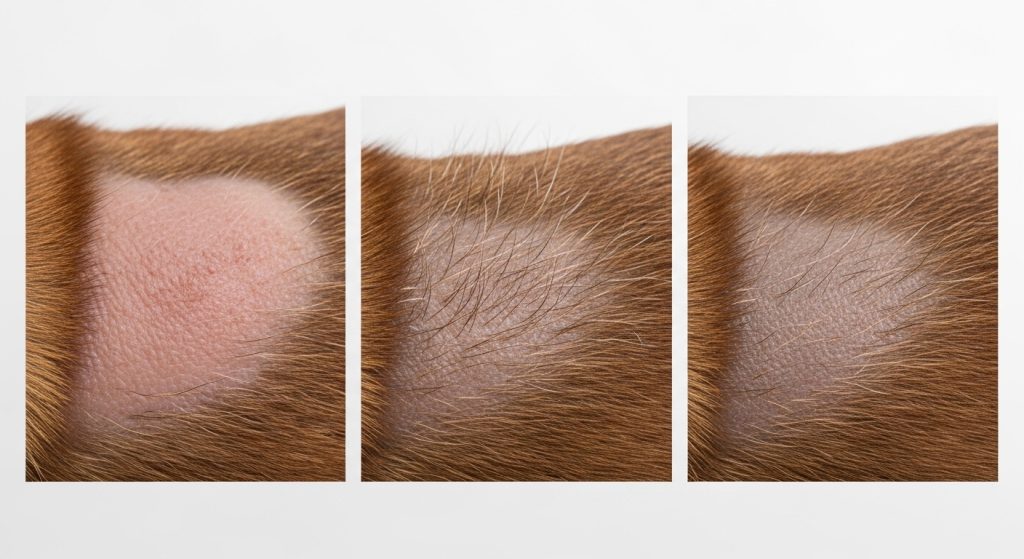
Home tip: Keep a simple weekly photo log of your dog’s bald patches. When you compare Week 1 to Week 6, the visible progress keeps you motivated — and helps your vet track how well the treatment is working.
What your dog eats directly affects how fast and how thick their coat grows back. After treating the root cause, nutrition is the single biggest factor in recovery speed.
Consider switching to a grain-free or limited-ingredient dog food if allergies are suspected. Many dogs see dramatic coat improvement within 8 to 12 weeks of a diet change alone.

his is the question every dog owner asks first. The honest answer is — it depends on the cause, the treatment, and your dog’s overall health. But here is a realistic timeline:
If there is no new hair growth visible after 8 weeks of treatment, return to your vet. Scarred or severely damaged follicles may not recover — early treatment is always better.
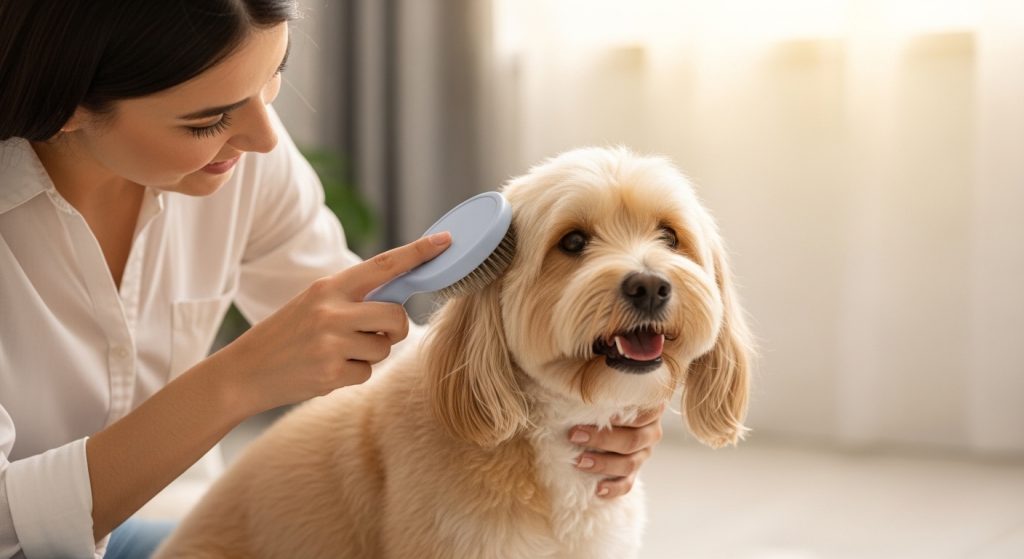
The way you groom your dog during recovery matters more than most people realize. Good grooming improves blood circulation to the skin, removes dead cells, and creates the best environment for new hair to grow.
The best treatment is the one you never need. Here is how to keep your dog’s coat healthy and prevent hair loss in the first place:
Prevention is 10 times cheaper than treatment. A monthly flea tablet costs a fraction of what a full mange treatment course costs. Small habits make a huge difference over time.
Can dog hair grow back after mange?
Yes, in most cases, dog hair fully grows back after mange is treated. Recovery takes 3 to 6 months. If the skin is not deeply scarred, the follicles will recover completely with the right treatment.
Is coconut oil safe for dogs?
Yes, coconut oil is safe to apply topically on dogs. Use small amounts and avoid areas with open wounds. Do not let your dog eat large amounts as it is high in fat and can upset the stomach.
Will my dog’s fur grow back after surgery and shaving?
Yes. Shaved fur after surgery grows back normally. Most dogs see noticeable regrowth within 6 to 8 weeks, with full coat restoration in 3 to 6 months, depending on breed and coat type.
What is the best supplement for dog hair growth?
Omega-3 fish oil is the most consistently effective supplement for coat health. Biotin and zinc supplements are also helpful, especially when nutritional deficiency is the cause of hair loss.
Can stress cause hair loss in dogs?
Yes. Dogs under chronic stress can develop a condition called psychogenic alopecia, where they over-groom and pull out their own fur. Reducing anxiety triggers and providing mental stimulation usually
Watching your dog lose their fur is stressful — but it is rarely the end of the story. With the right diagnosis, the right treatment, and a little patience, most dogs recover their full, healthy coat. The key is not to wait too long before acting.
Start by identifying the cause. Talk to your vet. Support the healing with good nutrition, gentle grooming, and the right home remedies. And take weekly photos — because when you look back at where you started, the progress will surprise you.
Your dog cannot tell you what is wrong. But their coat will. And now, you know how to listen.
Found this helpful? Share it with a fellow dog owner who might be dealing with the same problem. And if you have a question about your specific dog’s condition, drop it in the comments — happy to help.